How to Block a Stingray Device: Detection Apps & IMSI Catcher Protection Explained in 2026
Law enforcement uses StingRays, Hailstorms and other IMSI catchers to track mobile devices and capture data. In this guide, learn how to detect a StingRay device and keep your personal information secure.


Written by Kate Hawkins (Editor, Writer)
Reviewed by Samuel Chapman (Writer, Editor)
Facts checked by Igor Kurtz (Fact-checking editor)
Last Updated:
All our content is written fully by humans; we do not publish AI writing. Learn more here.
Key Takeaways: Avoid StingRay Detection
- Disable 2G where possible. IMSI catchers can force phones from 4G or 5G onto less secure 2G networks. Disabling 2G reduces this risk, although it won’t prevent every type of cellular surveillance.
- Get a StingRay detection app. Some apps, like SnoopSnitch, monitor for unusual network activity and alert you if a StingRay is detected.
- Use encrypted communications apps. SMS messages aren’t encrypted, making them vulnerable to interception — try using an app like WhatsApp or Signal.
Best VPNs to Use With StingRay Detectors
- NordVPN — NordVPN’s strong encryption ensures StingRays and other cell-site simulators cannot access your data even if your connection is intercepted. Get NordVPN for 76% off a two-year plan.
- Surfshark — Surfshark’s GPS spoofing on Android reduces the effectiveness of cell-site simulator location tracking. Affordable plans start at $2.19 per month.
- ExpressVPN — ExpressVPN keeps connection speeds fast while protecting your personal data from StingRay capture. Try ExpressVPN risk-free for 30 days.
Facts and Expert Analysis: StingRay Detectors
- StingRays are surveillance devices. They mimic cell phone towers on GSM and 2G networks to capture mobile data such as phone logs and text messages. 1
- StingRay use is subject to legal restrictions. Federal DOJ policy generally requires warrants for criminal investigations, while state laws and court decisions impose additional requirements4. The Supreme Court established protections for historical cellular location data in 2018, and a federal appeals court addressed real-time StingRay tracking in September 2026.
- VPNs are an easy way to secure your data. Though it won’t block StingRays, a VPN makes it impossible for the device operator to read data that’s sent or received.

StingRays and other IMSI catchers can track your phone and intercept sensitive information. Learn how to detect suspicious cellular activity, reduce surveillance risks and protect your personal data. Using detection apps and a high-quality VPN can help secure your activity, but they won’t stop your phone from connecting to the device.
Detecting these devices isn’t always straightforward, particularly as newer IMSI catchers can exploit more advanced cellular networks. In this guide, I’ll explain how StingRays work, which detection tools are worth considering and the practical steps you can take to protect your privacy.
-
02/20/2025 Facts checked
We’ve rewritten this article with the latest details and added information about detection apps and blocking methods.
What Is a StingRay Device?
A StingRay mimics a cell tower in order to intercept mobile device signals. When a mobile phone is nearby, it can unknowingly connect to the device, and the StingRay can collect data such as call logs, text messages and location information.

(Image Source: US Patent and Trademark Office)
You can reduce StingRay surveillance by disabling 2G, using end-to-end encrypted messaging apps and protecting your internet traffic with a VPN. However, these measures can’t prevent every IMSI catcher from connecting to your phone. To block cellular connections entirely, you’ll need to shield your device with something like a Faraday bag.
In 2015, a report by The Intercept revealed a leaked government catalogue detailing StingRay models and IMSI catchers. 10 The leak showed that law enforcement uses advanced devices capable of tracking phones, intercepting calls and potentially injecting spyware – and that the public are generally unaware of this kind of surveillance.

(Image Source: The Intercept)
StingRays are just one kind of IMSI catcher. IMSI stands for “international mobile subscriber identity” and refers to the unique number assigned to every mobile SIM card. Cellular networks use IMSI numbers to identify and authenticate users.
What’s the Difference Between StingRay and Hailstorm Devices?
The difference between StingRay and Hailstorm devices is that StingRay and Hailstorm are similar devices created by the Harris Corporation, but they operate on different networks. StingRay is the original cell-site simulator, working on 2G networks. Hailstorm devices are more advanced, and operate on 3G and 4G networks. 2 The majority of cell networks are 3G and 4G, so Hailstorm is more difficult to avoid. 9
Both types of IMSI catchers pose significant privacy concerns, but the original StingRay is much easier to detect and defend against than its Hailstorm counterpart. Hailstorm’s ability to bypass newer network security protocols makes it harder to effectively identify and block.
Are StingRay Devices Legal?
StingRay devices are legal for authorized law enforcement use in the U.S., but their deployment is subject to constitutional protections, state laws and agency policies. Private ownership isn’t automatically illegal, although operating unauthorized radio equipment or intercepting communications can violate federal law.
The Department of Justice (DOJ) generally requires federal agents to obtain a search warrant before using a cell-site simulator in criminal investigations8, with limited exceptions for emergencies. However, this is an agency policy rather than a federal law governing every law enforcement agency.
In 2018, the Supreme Court ruled in Carpenter v. United States that police generally need a warrant to access historical cell-site location records. The ruling didn’t directly address real-time tracking with StingRays. However, in September 2026, the Fourth Circuit ruled in Andrews v. Baltimore City Police Department that using a cell-site simulator constitutes a Fourth Amendment search requiring a warrant.
Congress has also attempted to regulate these devices. The Stingray Privacy Act of 2015 (H.R. 3871) expired without becoming law, while the Cell-Site Simulator Warrant Act of 2025 (H.R. 4811 and S. 2522) proposes federal warrant requirements and restrictions on their use. As of October 2026, the newer legislation remains pending.
Legal requirements can vary by jurisdiction, and unauthorized use of IMSI catchers can carry serious consequences. Although criminals can obtain or build these devices3, using them to intercept private communications or interfere with cellular networks may violate telecommunications and privacy laws.
Who Uses Cell-Site Simulators?
Cell-site simulators like StingRays and Hailstorm devices are primarily used by government agencies and police forces in Canada, the U.K. and the U.S. However, it’s also possible for hackers or cybercriminals to use IMSI catchers to steal personal information.
Law Enforcement
Police departments use cell-site simulators to locate suspects during criminal investigations. Federal DOJ policy generally requires a warrant before deployment, except in limited circumstances, but state laws and judicial requirements vary. Cell-site simulators can help determine a phone’s location when it connects to the device.
The Department of Justice (DOJ) states that cell-site simulators do not function as GPS locators and must not obtain “the contents of any communication.” 5 This includes phone calls, SMS messages, images, emails and contact lists.
Intelligence Agencies
Agencies like the Federal Bureau of Investigation (FBI) use cell-site simulators for national security purposes. This can involve monitoring cell phones for potential threats or gathering intelligence from a target device.
Due to the sensitive nature of investigations, the use of cell-site simulators is often kept secret. This poses a privacy risk for nearby electronic devices belonging to innocent civilians, as these simulators can intercept data from cell phones belonging to people who have not been named in a search warrant or charged with a crime. 6
Unauthorized Actors
Hackers and cybercriminals can exploit IMSI catchers to steal personal information from unsuspecting individuals, though this is less likely due to the high price of legitimate cell-site simulators.
Rogue devices that mimic nearby cell towers can collect data from cell phones, including specific locations and the contents of phone calls and texts. This could lead to identity theft, fraudulent activity and financial losses.
How Can You Tell if a StingRay Is Tracking Your Phone?
StingRays are difficult to detect because they imitate legitimate cell towers. However, unusual network behaviour may provide clues that your phone is connecting to an IMSI catcher. Some potential warning signs include:
- Unexpected network downgrades: Your phone suddenly switches from 4G or 5G to 2G, particularly in an area where you normally have a strong connection. Some IMSI catchers exploit weaknesses in older networks.
- Unexplained battery drain: Your battery drains faster than usual without an obvious cause. However, battery drain alone isn’t a reliable indicator of surveillance.
- Unfamiliar cell tower IDs: Network monitoring tools display unknown tower identifiers, unusual signal strengths or unexpected changes in network information.
- Frequent disconnections: Your phone repeatedly loses its cellular connection or rapidly switches between towers, even when you’re stationary.
None of these signs confirms that you’re being monitored. Poor coverage, network maintenance and ordinary connection problems can cause similar behaviour. Detection apps can help identify suspicious patterns, but their accuracy varies, and even dedicated tools can produce false positives or miss IMSI catchers entirely.
What Are the Best StingRay Detection Apps?
StingRay detection remains difficult, and many older detection apps are outdated or no longer maintained. However, newer options, including the Electronic Frontier Foundation’s (EFF) Rayhunter and Android’s built-in cellular security warnings, can help identify suspicious network activity. These tools have limitations, though, and none can reliably detect every IMSI catcher.
Detection apps are primarily for Android devices; you won’t find many options for iOS. This is due to the level of access each operating system allows to its cellular network data. Android is much more flexible with its permission levels, whereas iOS has strict security measures to limit access to sensitive data.
The table below compares StingRay detection apps and tools, including their device requirements, detection methods and limitations.
| Detection Tool | Device Requirements | What It Detects | Main Limitations |
|---|---|---|---|
| Rayhunter | Compatible mobile hotspot or other supported hardware | Suspicious cellular signalling, including 2G downgrades and identity requests | Requires compatible hardware; cannot detect every IMSI catcher |
| Android 16 Security Warnings | Android 16 with a compatible modem | Unencrypted cellular connections and IMSI/IMEI disclosures | Hardware-dependent; notifications are off by default |
| SnoopSnitch | Supported rooted Qualcomm Android phone | Suspicious cell tower activity and potential IMSI catchers | Limited compatibility; latest F-Droid release was in 2022 |
| AIMSICD | Android; root required for some features | Unusual cell tower activity, suspicious identifiers and silent SMS | Effectively abandoned; last F-Droid release was in 2016 |
| Darshak | Rooted Samsung Galaxy S3 running Android 4.1.2 | Silent SMS and cellular network security issues | Outdated; compatibility with modern Android is unverified |
Rayhunter and Crocodile Hunter
Rayhunter is an open-source IMSI catcher detection tool released by the Electronic Frontier Foundation (EFF) in March 2025. Unlike traditional detection apps, Rayhunter runs on a compatible mobile hotspot and analyzes cellular network traffic for suspicious behavior, including forced 2G downgrades and unusual requests for identifying information.
When Rayhunter detects suspicious activity, it alerts you and records the event for further investigation. It’s actively maintained and easier to use than older hardware-based detection tools, although you’ll need a supported hotspot to run it. Rayhunter can identify warning signs of surveillance, but its findings aren’t conclusive proof of an IMSI catcher.
Rayhunter builds on the EFF’s earlier work with Crocodile Hunter7, an older detection tool that requires a laptop, a software-defined radio (SDR) and technical knowledge to operate. Crocodile Hunter is no longer actively maintained, making Rayhunter the more practical option for most users.
Android’s Built-In Mobile Network Security Warnings
Android 16 introduced built-in mobile network security notifications that can help identify suspicious cellular activity. On supported devices, these warnings alert you when your phone connects to an unencrypted network or shares identifying information, such as its IMSI or IMEI, with a cell tower.
You can enable these warnings through the Mobile network security section in Android’s Safety Center. However, the feature is disabled by default and requires compatible modem hardware, so it isn’t available on every Android 16 device.
These notifications can help you recognize potential StingRay activity, but they aren’t definitive proof of surveillance. Legitimate networks sometimes request device identifiers, too.
SnoopSnitch
SnoopSnitch is an IMSI catcher detector app for Android phones. However, the app needs a Qualcomm chipset to work properly, which limits its availability. See if your phone has this chipset by checking in the settings or searching online for the specifications. SnoopSnitch also requires a rooted device to access low-level network data.
To detect IMSI catchers like the StingRay, SnoopSnitch checks for unexpected signal downgrades, silent texts or connections to rogue cell towers that don’t belong to known carriers. You can also get security reports that explain potential threats and how to avoid them.
How Does Android IMSI Catcher Detector (AIMSICD) Work?
Android IMSI Catcher Detector (AIMSICD) is an older open-source Android app designed to identify suspicious cellular network activity. It monitors changes in cell tower connections, unexpected network downgrades and unusual encryption behavior. Some of its advanced detection features require root access.
However, AIMSICD is effectively abandoned. Its last listed F-Droid release dates back to May 4, 2016, and concerns about the project’s future and lack of maintenance were raised on GitHub in April 2017. Given its outdated codebase and uncertain reliability on modern networks, I wouldn’t recommend relying on AIMSICD for StingRay detection today.
Darshak
Darshak detects IMSI catchers by monitoring and analyzing cellular broadcast messages. It checks for unusual behavior, like silent SMS messages (a signaling message that doesn’t pop up on your phone), sudden network downgrades or unexpected cell tower switches. If Darshak detects something, you’ll receive an alert that you may be in a StingRay area.
Darshak was developed for the Samsung Galaxy S3, but as it’s open source, it should work on any Android device running 4.1.2 or later. However, it’s not without limitations — it requires deep access to network data, which means you need to root your cell phone.
Rooting your device disables its inherent security measures, leaving it vulnerable to hacking and malware. As Darshak isn’t regularly updated, its outdated codebase could cause further vulnerabilities.
How Can You Block StingRay Surveillance?
You can block StingRay surveillance using several methods, though blocking StingRay surveillance is tricky, but there are a few methods that help reduce the chances of your phone being tracked. Here are some of the easiest ways to avoid being caught by IMSI catchers.
Disable 2G and Watch for Network Downgrades
Disabling 2G is one of the simplest ways to reduce your exposure to IMSI catchers. Some cell-site simulators can force phones to disconnect from 4G or 5G networks and reconnect using less secure 2G protocols, where communications are easier to intercept. On supported Android phones, you can disable 2G through your mobile network or SIM security settings.
However, connecting to 5G doesn’t guarantee protection. Some 5G networks still depend on 4G infrastructure, and modern IMSI catchers can exploit signalling weaknesses or force connections onto older networks. Disabling 2G helps prevent this particular downgrade attack, but it won’t block every IMSI catcher or prevent all forms of cellular location tracking.
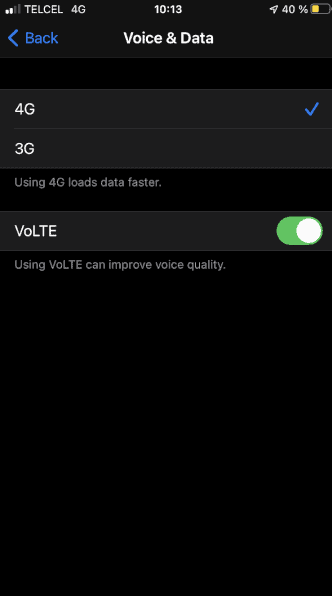
Not every phone provides a dedicated 2G setting, and disabling older network connections may affect coverage in some areas. If your device supports 2G protection, enable it and use end-to-end encrypted messaging apps to help safeguard your communications.
Use Encrypted Communications
The main risk StingRay poses to your data is that the false cell tower captures information sent to and received by your phone, such as texts and phone calls. You can protect this data by using apps like Signal and WhatsApp, or iMessage and FaceTime on iOS.

These messaging apps provide end-to-end encryption, so unauthorized third parties (such as StingRay operators) can’t access your data. The StingRay device can detect and capture your data, but encryption makes it unreadable. It doesn’t block StingRay connections entirely, but it does make your data significantly less accessible.
Use a Faraday Bag
A Faraday bag is a pouch that blocks signals and stops your phone from connecting to any network, including IMSI catchers. When your device is inside the bag, it is unable to communicate with any cell tower — even your regular phone network. The bag is lined with conductive materials that create a shield around your phone, blocking network signals.
A Faraday bag is a more foolproof option, but it limits usability. After all, when your phone is in the bag, you can’t make or receive calls or messages, and you’ll have no internet connection. High-quality bags can be expensive and, while there are other practical uses (like protecting payment cards while traveling), they’re not convenient for day-to-day use.
Can VPNs Protect You From StingRay Technology?
Yes, a VPN can help protect your data from being accessed by StingRays and similar IMSI catchers, but it won’t stop your phone from connecting to the cell-site simulator. When the device mimics a cell tower and your phone connects, your activity is intercepted. A VPN ensures traffic sent or received is undecipherable to whoever is capturing it.
A quality VPN protects your traffic by using secure encryption protocols to scramble your online data. A StingRay can tell that data is being transmitted, but the encryption prevents the data from being read. This also means a VPN can protect you from hackers co-opting IMSI catcher technology.
If you’re looking for a VPN to protect your phone, check out our NordVPN review and Surfshark review. Importantly, VPNs don’t secure regular text messages — make sure you’re using a secure messaging app like WhatsApp or Signal. VPNs also don’t stop StingRays from tracking your general location.
IMSI catchers detect signal strength, which can be used to estimate where you are. This occurs on the cell network level, and your VPN cannot block or mask it.
Final Thoughts
Protecting your phone from StingRays is challenging, but there are ways to secure your data. However, no single method is foolproof, so it’s best to use several methods combined. The strategy of disabling 2G networks, using encrypted apps and connecting to a VPN works well.
Do you think law enforcement should have to disclose when and where they use StingRays? Have you tried using an IMSI catcher detection app? Which other privacy tools do you use to protect your data? Let us know in the comments, and thank you for reading.
FAQ: StingRay Device Blocker
Owning a StingRay or similar IMSI catcher isn’t automatically illegal in the U.S., but operating one without authorization can violate telecommunications and privacy laws. Law enforcement agencies are subject to additional legal requirements governing surveillance and data collection.
A StingRay looks like a small cell tower, with multiple connections for different antennas. Usually the device is small — the size of a small laptop or briefcase — making it portable.
Yes, a VPN can protect against StingRays to an extent. While it cannot stop cell phones from connecting to the false cell tower signal, a VPN encrypts the data sent from the device. The encrypted data will be unreadable to whoever is using the StingRay.
Local police departments and federal law enforcement agencies use StingRays and other IMSI catchers to track cell phones and capture data from them. The devices are used as part of authorized surveillance operations.
Sources:
- How Cops Can Secretly Track Your Phone – The Intercept
- Stinging Back: Resisting Government Surveillance of Cellphones – Criminal Legal News
- With $20 of Gear from Amazon, Nearly Anyone Can Make This IMSI-Catcher in 30 Minutes – Vice
- H.R.3871 – To amend title 18, United States Code, to regulate the use of cell-site simulators, and for other purposes. – Congress.gov
- Department of Justice Policy Guidance: Use of Cell-Site Simulator Technology – Justice.gov
- Federal Recommendations on the Use of Cell Site Simulators – ACLU
- Crocodile Hunter – Electronic Frontier Foundation
- State of Maryland v. Kerron Andrews – Electronic Frontier Foundation
- The Mobile Economy 2024 — GSMA
- Stingrays: A Secret Catalogue of Government Gear for Spying on Your Cellphone — The Intercept