The Best Free Korea VPN in 2026
Free VPNs generally aren’t a good idea, but there are exceptions. If you’re looking for a free Korea VPN, we’ve got four of the best services in this guide. Read to learn why they’re the best for South Korea.



Written by Arjun Ruparelia (Writer)
Reviewed by Sandra Pattison (Editor, Writer)
Facts checked by Eugenie Tiu (Editorial Assistant)
Last Updated:
All our content is written fully by humans; we do not publish AI writing. Learn more here.
Key Takeaways: Top 5 Korea VPN Services
- ProtonVPN — Free VPN that offers unlimited data
- PrivadoVPN — Overall best VPN for Korea
- Hide.me — Feature-rich free VPN for Korea
- Windscribe — Fast free VPN for South Korea
- TunnelBear — Free VPN that offers a South Korean IP address
Facts & Expert Analysis: What You Should Know About Free Korea VPN
- South Korea enjoys a mostly free internet, but a few laws threaten the privacy of the average user.
- A virtual private network (VPN) can help by encrypting your connection so no one can intercept your internet traffic or monitor your online activities, but free VPNs often provide few of the protections you’d expect, or they restrict your service somehow.
- Proton VPN is the best free VPN for South Korea (you need an upgrade to access the South Korean server), but we have four more free VPN alternatives, too.

There are many reasons why you might want to use a South Korea VPN, from accessing geoblocked content to ensuring security during sensitive online activity. Plus, if you’re on a budget, you might be looking for the best free Korea VPN. However, many free services rarely offer the security features and privacy of the best VPNs.
While South Korea is far from being censorship-heavy, the South Korean government still regulates content that violates laws or social norms on the orders of the Korean Communications Standards Commission (KCSC). The government also blocks pornography and pirated material.
South Korea is also home to some of the best content in the world, from ‘Squid Game’ to BTS songs. However, many shows may be available in streaming services’ U.K. or U.S. libraries only. If South Koreans want to bypass these geoblocks, they’ll need a VPN.
No matter the reason, if you want to use a VPN for free in South Korea, we have five of the best free VPN options available — and we will also explain where these completely free VPNs fall short in terms of security, privacy, features or server availability in South Korea.
Protect Your Privacy. Get Our Free VPN Guide Now!
- Comprehend the essential role a VPN plays in safeguarding your digital life
- Gain a deep understanding of how VPNs function under the hood
- Develop the ability to distinguish fact from fiction in VPN promotions
-
10/01/2024 Facts checked
We updated the list to reflect the latest advancements in VPN technology and usability.
-
01/26/2025 Facts checked
We updated the article with PrivadoVPN as the best option and reordered the list.
-
03/07/2025 Facts checked
We updated the article with more information on PrivadoVPN’s features and recent developments in South Korea’s internet freedom landscape.
-
06/05/2025 Facts checked
This article was updated with more details about hide.me VPN and South Korea’s cybersecurity practices.
-
09/03/2025 Facts checked
We expanded on our coverage of Proton VPN and added more details about internet freedom in South Korea.
-
11/26/2025 Facts checked
We updated this article with more information about Windscribe and restructured the section on South Korea’s internet freedom landscape.
What Are the Top Free VPNs for South Korea?
- 1
- : PayPal, Credit card
- : 10
- :
- :
- :
- :
- 2
- : PayPal, Credit card
- : 10
- :
- :
- :
- :
- 3
- : PayPal, Credit card, SEPA, SOFORT, Apple Pay, Google Pay
- : 10
- :
- :
- :
- :
- 4
- : PayPal, Credit card
- : Unlimited
- :
- :
- :
- :
Average speed - 5
- : Credit card
- : Unlimited
- :
- :
- :
- :


What Makes the Best Free Korea VPN?
The best South Korea VPN should be able to get past geo-restrictions and offer excellent security, online privacy and connection speed. PrivadoVPN, hide.me, Proton VPN, Windscribe and TunnelBear meet these criteria.
TunnelBear offers a South Korean server on the free plan, making it the right pick for a Korean IP address. If you want to do your research about a free VPN for South Korea, here’s a breakdown of the factors to consider.
How Do Free VPNs Handle Security & Privacy?
Securing your connection and staying anonymous over the internet are some of the primary uses of VPNs. Unfortunately, some services fail to get the fundamentals right, especially the free ones.
Look for a secure encryption protocol like OpenVPN or WireGuard, and the AES 256-bit cipher, for top-notch VPN security. In addition, ensure the VPN isn’t based in countries like India that require user data logging.
As South Korea has one of the highest IPv6 adoption rates globally, at over 50%, effective IPv6 leak prevention is critical when connecting to Korean networks to prevent exposure of your real address despite VPN protection.
Advanced VPNs offer IPv6 routing table leak protection, which is crucial in South Korea, where ISPs like SK Broadband and KT implement sophisticated IPv6 tracking methods that can identify users even when standard IPv6 leak prevention is in place.
Ensure your free Korea VPN protects against WebRTC leaks as well, which can expose your real IP address even when connected to a VPN, compromising your privacy when accessing Korean websites.
A reliable kill switch is also essential in a Korea VPN, as it automatically cuts your internet connection if the VPN drops, preventing your real IP address and activities from being exposed to your ISP or government monitoring.
While not commonly available in free VPNs, obfuscated servers can disguise your VPN traffic as regular HTTPS traffic, which is beneficial for bypassing potential VPN detection systems in South Korea.
Also look for VPNs offering DNS-over-HTTPS support, as this prevents Korean ISPs from monitoring your DNS requests and potentially logging which websites you’re attempting to access.
Given South Korea’s advanced mobile infrastructure, with frequent network switching between WiFi and 5G, the IKEv2 protocol is valuable for mobile users in the country. IKEv2 excels at seamlessly reconnecting when switching between networks or during brief connection drops, preventing exposure of your real IP address when moving between Seoul’s densely packed WiFi hotspots and cellular networks — a common scenario in Korea’s tech-forward urban centers.
Additionally, when using public WiFi in South Korea’s popular PC bangs (internet cafes), look for a VPN that offers RDP-blocking capabilities to prevent remote access exploits that could compromise your gaming accounts or personal information.
How Fast Are Free VPN Speeds?
Even with a secure connection, you should be able to load webpages and stream content at a decent speed. Many free VPNs fail to deliver good speeds, so look at a service’s performance before you settle on a free South Korean VPN.
What Are the Streaming Capabilities of Free VPNs?
Fast speeds are helpful only if you can access content in the first place. Websites like Netflix ban VPNs, and many services fail to get past Netflix’s geo-restrictions. Other services, like Amazon Prime Video and Hulu, are catching on fast too.
Make sure you select a VPN service that can effectively bypass geoblocks. A quality Korea VPN should be able to access the Korean Netflix catalog, which features exclusive K-dramas and content not available in other regional libraries.
Look for VPNs that can also reliably unblock popular Korean streaming platforms like Wavve, Kakao TV, SBS Korea and TV Chosun to access K-dramas and entertainment content from anywhere. For K-drama and K-pop fans outside Korea, a VPN that can bypass geo-restrictions is crucial for accessing shows like ‘Crash Landing on You’ or ‘Goblin’ on their original platforms.
For gaming enthusiasts and esports fans, access to AfreecaTV, Korea’s popular streaming platform for StarCraft tournaments and gaming content, requires a VPN with servers specifically optimized to handle the platform’s high-bandwidth video streams. Few free VPNs can provide the necessary speed and stability for this specialized use case.
Port forwarding is essential for Korean users interested in hosting game servers or accessing home networks remotely. While most free VPNs restrict port forwarding entirely, some premium options, like Windscribe, offer this feature with their static IP add-ons. This functionality is great South Korea’s substantial gaming community, allowing gamers to host private servers for popular titles while maintaining their privacy through the VPN connection.
Which Free VPNs Offer a South Korea Server?
Few free VPNs offer South Korean servers, which is a shame as the availability of South Korean servers means the VPN can offer you a South Korean IP address and secure your connection while you access local websites or content.
While it’s helpful to have South Korean server options, not many free VPNs offer them unless you switch to a paid plan. However, a few free VPNs, like TunnelBear, do offer South Korean servers on the free plan.
When selecting a free VPN for Korea, prioritize services with servers specifically in Seoul, as this major connectivity hub typically offers the best performance for accessing Korean content. Many free VPNs that claim to have Korean servers may actually be routing through neighboring countries, resulting in higher latency and slower connections.
Avoid free VPNs that offer only the outdated PPTP protocol. Its weak encryption is vulnerable to government-level monitoring, making it inadequate for privacy protection in South Korea. Always verify that your chosen free VPN supports more secure protocols like OpenVPN, IKEv2 or WireGuard.
What Are the 5 Best Free VPN Korea Choices?
The best South Korea VPN should be able to get past geo-restrictions and offer excellent security, online privacy and connection speed. Proton VPN, PrivadoVPN, hide.me, Windscribe and TunnelBear meet these criteria.
1. Proton VPN
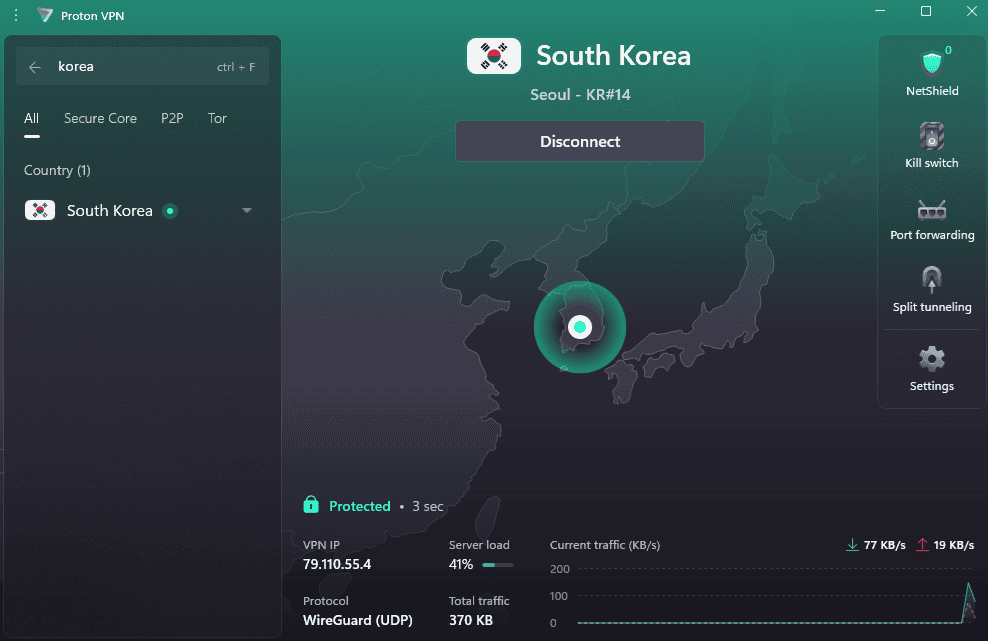
Proton VPN is the best free VPN for Korea, offering free servers in 10 countries: the U.S., Canada, Japan, Mexico, Netherlands, Norway, Poland, Romania and Singapore, Switzerland. These servers can bypass geoblocks on major streaming sites like Netflix, BBC iPlayer and Hulu.
Proton VPN is a secure option. You get to choose from three protocols — OpenVPN, IKEv2 and WireGuard. It also includes essentials like a kill switch and leak protection. You can learn more in our Proton VPN review.
Proton VPN’s preferred protocol is WireGuard and the “smart protocol” feature. It offers faster speeds, instant secure connections, better performance and improved battery life for mobile devices while maintaining robust security.
Proton VPN also recently introduced a unique Stealth protocol designed specifically to bypass stringent network restrictions and VPN blocks. This is valuable in countries with heavy censorship, as it disguises VPN traffic as normal HTTPS connections, making it almost completely undetectable.
The provider has enhanced its profiles functionality as well, allowing users to add advanced settings like NetShield and port forwarding, or set up “connect and go” to launch specific websites when connecting to the VPN.
Proton VPN now offers a dedicated Apple TV app, which allows users to stream content from services like Netflix, Amazon Prime Video and Disney+ with full privacy protection on their big screen TVs.
In addition, the Windows app now features LAN connections capability, allowing users to connect to printers, speakers and other devices on their local network while maintaining VPN protection for internet traffic.
Proton VPN now offers support for multiple languages, including Dutch, French, Italian, German, Russian, Chinese (both simplified and traditional), Spanish, Greek, Hungarian, Croatian, Polish, Portuguese, Indonesian and Turkish, making it more accessible for users worldwide.
Unlimited Data
Proton VPN’s free plan offers unlimited data, which is great for browsing without limits. However, there’s a catch: users can’t select their preferred servers. You’ll have to click to connect several times to connect to the server you want.

The paid version starts at $2.99 per month for the two-year plan. That’s more expensive than premium VPNs like NordVPN and Surfshark.
However, if you like ProtonVPN for its intuitive, feature-rich app, you do get 10 simultaneous connections. You can also try out ProtonVPN risk-free using the 30-day money-back guarantee.
- Unlimited GB
- 1
- Yes
- 500 GB storage 1 user 15 extra email addresses for you Support for 3 custom email domains Unlimited folders and labels Unlimited hide-my-email aliases Dedicated customer support Ultra fast and private VPN Encrypted password manager Encrypted cloud storage for photos and documents Advanced account protection
- Unlimited GB
- 10
- Yes
- **Renewal prices differ for the 1-year and the 2-year plans. Price includes all premium Proton services (Proton Mail, Calendar, Drive, VPN, Pass, & Wallet)
- Unlimited GB
- 10
2. PrivadoVPN
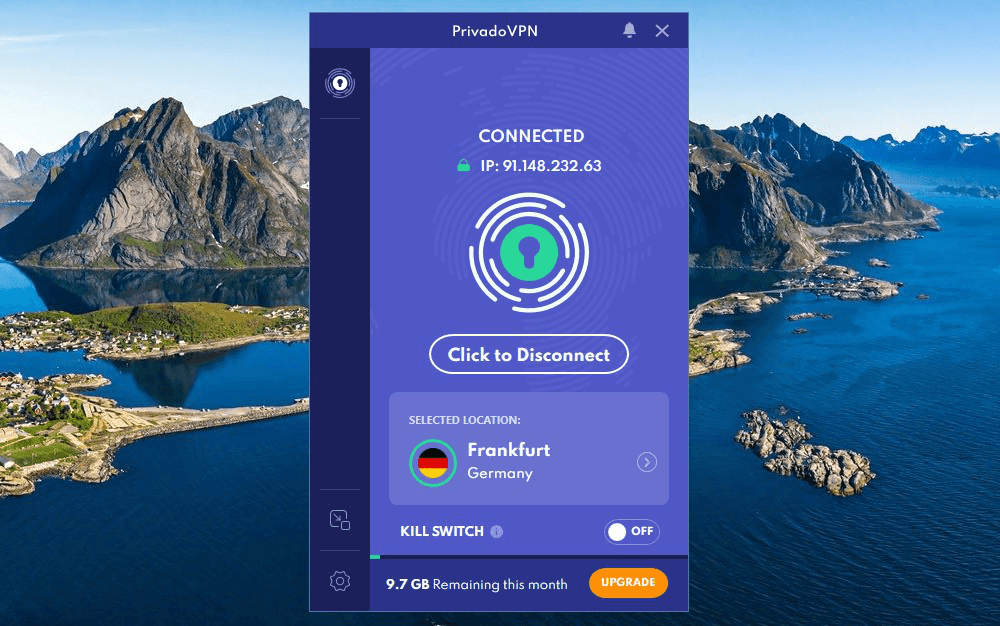
PrivadoVPN is one of the best free VPNs to use in Korea. It offers free servers in 10 countries: France, India, Mexico, the Netherlands, the United States, Canada, Argentina, Brazil, Germany and the United Kingdom. These servers can reliably unblock some streaming services, including Amazon Prime Video and BBC iPlayer.
PrivadoVPN’s free servers offer reasonably fast speeds, making it a good choice for fast browsing. It has apps for all the major streaming services, and they are easy to install and navigate.
The SpeedTests feature allows you to compare connection speeds across different server locations. This helps you find the fastest server for your needs, ensuring optimal performance whether you’re streaming, gaming or browsing.
What’s more, with PrivadoVPN’s new GeoJump feature, you can override your device’s GPS location in addition to your IP address. This advanced feature is particularly useful for mobile apps that use GPS verification, providing an extra layer of location privacy and access to region-restricted content.
PrivadoVPN also now offers a truly global experience, with support for multiple languages, including Dutch, French, Italian, German, Russian, Chinese (both simplified and traditional), Spanish, Greek, Hungarian, Croatian, Polish, Portuguese, Indonesian and Turkish. This makes it more accessible for users around the world.
Swiss Privacy & Security
PrivadoVPN is based in Switzerland, which has the best privacy laws in the world and follows a strict no-logs policy. Plus, it uses only reliable and secure VPN protocols, such as IKEv2, OpenVPN (the gold standard for VPNs) and the fast and modern WireGuard, which offers significantly faster speeds than older protocols while maintaining robust security — ideal for streaming Korean content without buffering.
In 2024, PrivadoVPN introduced Control Tower, a comprehensive security suite that includes ad blocking, threat protection and malware defense. This additional layer of security helps protect you from malicious websites and annoying ads while browsing online, enhancing your overall internet experience.
PrivadoVPN also recently launched a Chrome web proxy extension, allowing you to mask your IP address and protect your browser sessions with a single click. This lightweight alternative to the full VPN app is perfect for quick browsing privacy without affecting other applications on your device.
Another useful security feature is “trusted networks,” which gives you more control over when your VPN connects automatically. You can designate certain WiFi networks as trusted, allowing you to customize your protection based on your location and network environment.
The service has also enhanced its split tunneling capabilities with SmartRoute, allowing users to better control their network traffic by selecting specific apps to bypass VPN servers. This gives you greater flexibility in managing which applications use the VPN connection.
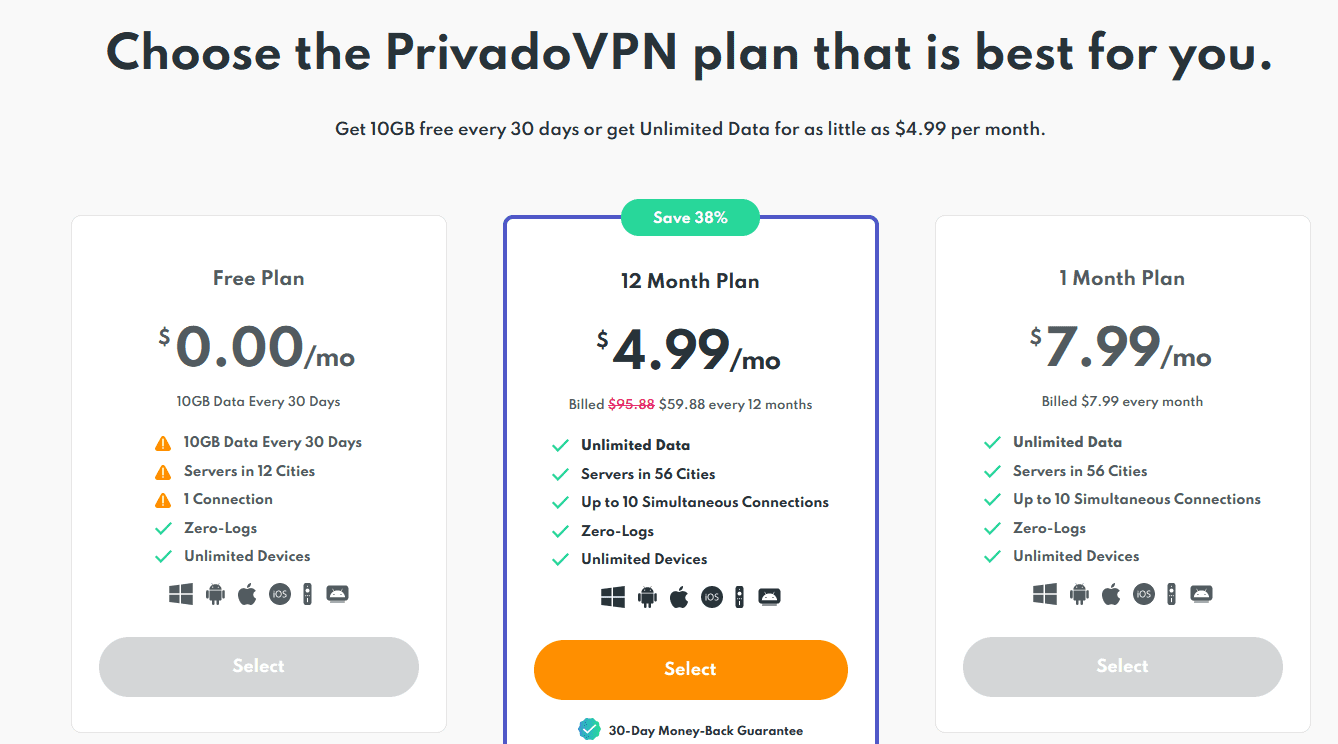
PrivadoVPN comes with a 10GB free plan, though it offers monthly and annual plans as well. Lite Mode is available for free users, maintaining their protection even after they’ve used the monthly data allowance. While speeds are throttled after the 10GB limit, you’re still protected, making it an excellent option for users who prioritize security over speed.
The monthly plan costs $10.99, while the yearly subscription costs $1.33. Read our full PrivadoVPN review for more information.
- 10GB
- 1
- Unlimited GB
- 10
- Yes
3. hide.me
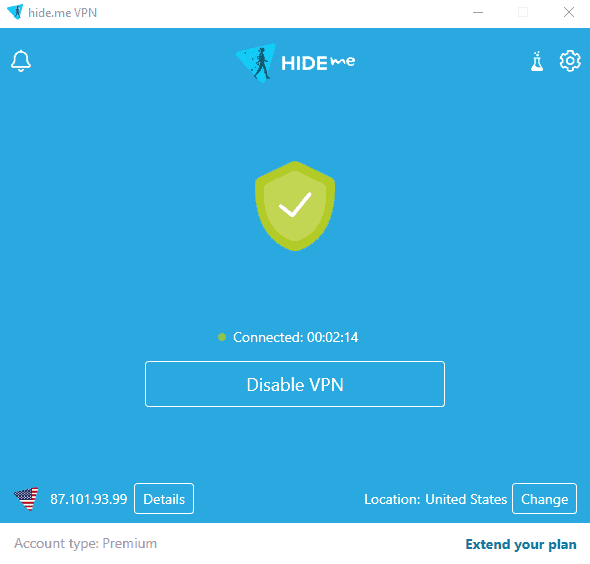
hide.me offers access to almost all features, even on the free version. For example, you get the browser extension on the free plan, so you can protect yourself against WebRTC leaks.
hide.me is a secure VPN that offers four security protocols — OpenVPN, IKEv2, SSTP and SoftEtherVPN — and AES 256-bit encryption. WireGuard is also available, but only to paid users (unless you’re on Linux).
hide.me has significantly optimized its WireGuard implementation, providing even faster speeds without compromising security. This makes it an excellent choice for streaming Korean content or for gaming with minimal latency.
hide.me now offers SmartGuard as well, a comprehensive security tool designed to block intrusive ads, trackers and malicious websites that can compromise your privacy. This feature provides an additional layer of protection when browsing online.
The VPN provider has introduced dynamic port forwarding as well, allowing for better performance with peer-to-peer applications and gaming. This feature is especially useful if you’re in South Korea and want to host content or games while maintaining your privacy.
In addition, hide.me has added a dedicated social media section to its app, along with convenient features to report broken websites, request streaming locations and report bugs directly from the interface. This makes it easier for users to get assistance with accessing geo-restricted content.
hide.me offers a Chrome web proxy extension as well, allowing you to mask your IP address and protect your browser sessions with a single click. This lightweight alternative to the full VPN app is perfect for quick browsing privacy without affecting other applications on your device.
With hide.me, you get 10GB of free data per month. You can access eight server locations with this data — Germany, Canada, France, Singapore, Spain, the Netherlands, U.S. East, U.S. West and the U.K — making it one of the best free U.K. VPNs.
Fallback VPN Protocol
hide.me allows you to select fallback protocols, which are essentially backup protocols. If your current VPN protocol stops working, hide.me automatically switches to the fallback protocol to ensure you’re always safe online.
Additionally, with the ‘trusted networks’ feature, you have more control over when your VPN connects automatically. You can designate certain WiFi networks as trusted, allowing you to customize your protection based on your location and network environment.

hide.me isn’t expensive, and it is an excellent VPN that offers a broad range of features on the free version. You can also just try the paid version first if you’re interested, using the 30-day money-back guarantee.
hide.me offers a global experience, with support for multiple languages, including Korean. This makes it more accessible for users in South Korea who prefer using software in their native language. Get the full details in our hide.me review.
- 5 servers
- 10GB
- 1
- Unlimited GB
- 10
- Yes
4. Windscribe
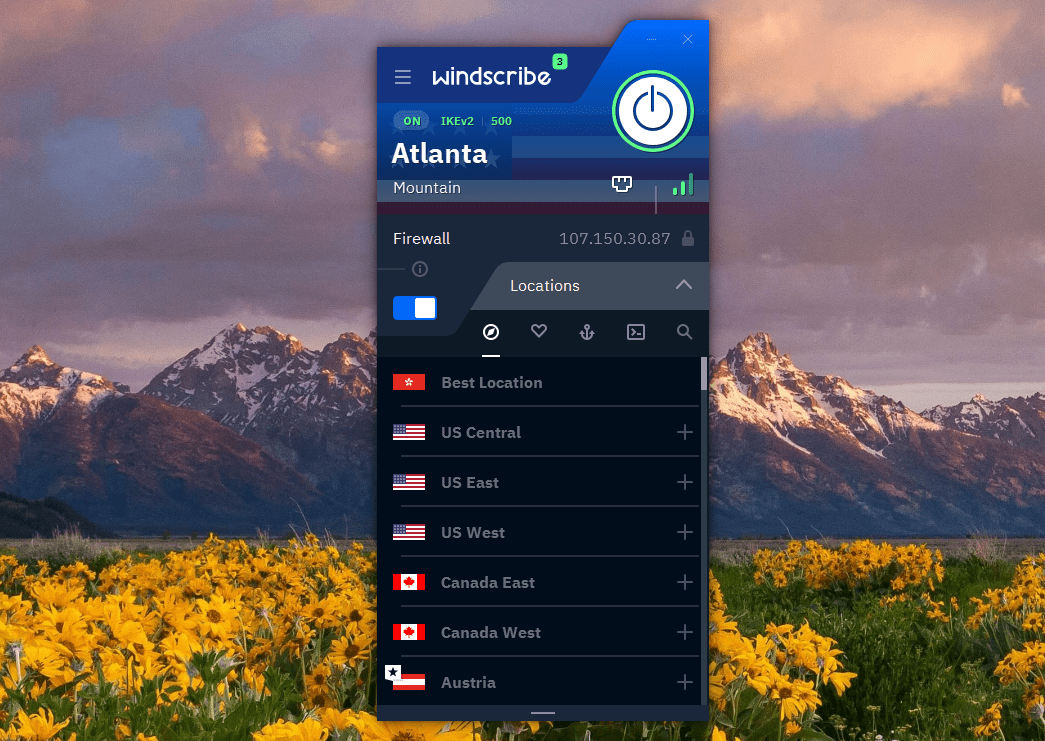




Windscribe offers fast connection speeds; it’s one of the fastest services according to our speed tests. It easily gets into geoblocked streaming sites like Netflix. This translates to a pleasant, high-quality streaming experience even on the free version.
The FreshScribe technology optimizes connections to streaming services, improving the ability to access geo-restricted Korean content with faster loading times and fewer interruptions.
Windscribe has also significantly expanded its customization options, allowing users to personalize the interface, connection settings and notification preferences. This makes it easier to optimize the VPN experience specifically for Korean network conditions.
Windscribe offers excellent security with protocols like OpenVPN, IKEv2 and WireGuard, plus AES-256 bit encryption. It has a strict no-logs policy, which means the VPN won’t have any data on your activity to give to the government or the internet service provider if they request to see what you’re doing online.
The VPN has also strengthened its DNS leak protection system, addressing false positives in leak tests and ensuring that DNS requests are properly secured when connecting through Korean networks.
Anti-fingerprinting technology prevents websites from tracking your browser’s unique digital fingerprint, adding an extra layer of privacy beyond what traditional VPN protection offers.
Plus, with the new IP pinning and rotation feature, users can either maintain the same IP address for services that require consistent identification or automatically rotate IPs at set intervals for enhanced anonymity.
Advanced users concerned about privacy in South Korea can utilize Windscribe’s unique double VPN capability to simultaneously connect to different locations using both the desktop app and the browser extension. For instance, you could connect to a server in Japan via the desktop app and a U.S. server through the browser extension, creating a multi-hop connection that makes tracking virtually impossible.
The provider has also implemented post-quantum encryption technology, making it one of the few VPNs prepared for the future of cryptography. This security measure protects user data against potential quantum computer attacks that could break traditional encryption methods.
Windscribe has been actively advocating against VPN restrictions globally through its VPN Day of Action campaign, helping to maintain legal VPN usage in countries where internet freedom faces various challenges.
The provider also offers free Pro accounts to verified journalists, charities and NGOs, which is valuable for those reporting on or working in regions with sensitive political situations like the Korean peninsula.
Generous Free Plan
Windscribe offers a generous free plan, with up to 15GB of free data each month — if you verify your email and Tweet about Windscribe.
The free plan lets you connect to servers in up to 10 countries — not including South Korea — and you have limited access to R.O.B.E.R.T., Windscribe’s browser extension and ad blocker.

The paid plan costs $5.75 per month, but you can get more creative with the build-a-plan option.
With the build-a-plan option, you can select three server locations (for $1 per month each), or two server locations and unlimited data plus access to R.O.B.E.R.T (again, for $1 per month each). With either option, you’ll need a minimum checkout value of $3 per month. If you needed a South Korea IP address, you could add that server for $1 per month.
You also get a three-day money-back guarantee if you want to test out Windscribe before you commit. Learn more about the service in our Windscribe review.
- Up to 15 GB free with email confirmation and Tweet
- 15GB
- Unlimited
- Unlimited GB
- Unlimited
- Yes
5. TunnelBear
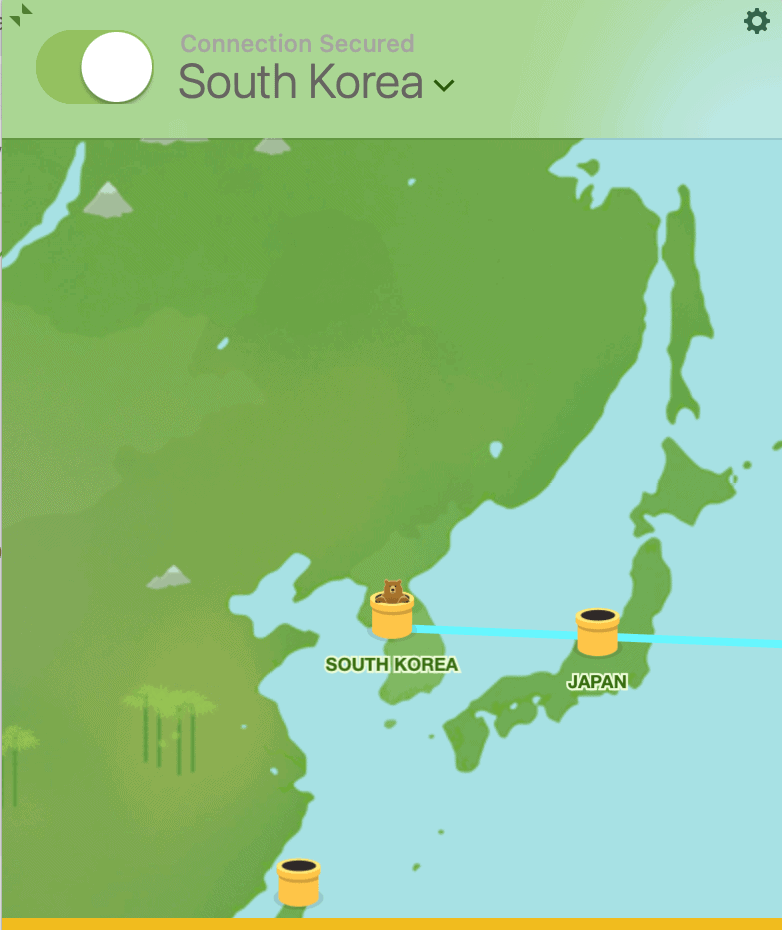
TunnelBear is an excellent pick if you’ve never used a VPN before. It has a simple interface with a dropdown menu featuring server locations. Just pick a preferred location and TunnelBear will connect you to a server in that country.
Though minimalistic on many fronts, TunnelBear doesn’t slack when it comes to security. You get OpenVPN combined with AES-256 bit encryption — currently the gold standard for security.
You also get a few handy features like GhostBear, which tries to conceal VPN usage. The feature helps you use TunnelBear even if you’re located in a country like China that has heavy censorship.
TunnelBear has a rather restrictive data cap of 500MB on the free plan. You probably won’t be able to stream movies in high quality, but you can view videos on social media or securely surf the web with another country’s IP address. Learn more about TunnelBear in our comprehensive TunnelBear review.
Servers in 40 Countries, Including Korea
TunnelBear offers servers in more than 40 countries, including South Korea, and the free plan can access all server locations. This means you can get a South Korean IP address with TunnelBear’s free plan.

TunnelBear’s three-year plan is its best value and costs $3.33 per month. You can get better VPNs like NordVPN for a lower monthly price, but if you need a minimalist VPN that does the job, TunnelBear might be a good choice.

- 2GB
- 2GB
- Unlimited
- Annual pricing only applies for the first year. Renewal fee varies. Unlimited GB, unlimited devices, priority customer service
- Unlimited GB
- Unlimited
- Yes
- Unlimited GB, centralized billing, account manager, price per user per month (minimum 2 users)
- Unlimited GB
- Unlimited
- Yes
How Do I Get a Korean IP Address Free?
To get a Korean IP address free, you need a VPN with physical South Korean servers within the country. Unfortunately, most of the VPN service options on this list do not include their South Korea servers in the free plan. However, you can use TunnelBear to get a South Korean IP address for free.
It’s important to note that there might be free VPN services out there that offer a South Korean server. However, we list only trusted VPNs. You might be able to get a Korean IP address with another, less secure VPN, but TunnelBear is a safe bet.
To get a South Korean IP address for free, launch your chosen VPN, select a server located in South Korea (typically in Seoul) and connect. Verify your new Korean IP address using an IP checker tool before accessing geo-restricted content.
What’s the Difference Between Free VPNs vs Paid VPNs vs Proxies?
Proxies are the least secure of the three. Free VPNs can offer both speed and security, but most free VPNs are insecure and unreliable, so you’ll need to choose carefully.
Even then, a free VPN won’t match a paid VPN service’s performance in most cases. Paid VPNs are your best bet. If you’re looking for budget-friendly options, you can always choose a service like Surfshark. It costs less and offers unlimited simultaneous connections, so you can bring the cost down to a negligible amount.
Another tool that comes in handy in South Korea is Surfshark’s NoBorders mode. The tool is automated such that when it detects internet restrictions, it offers up a list of servers that can bypass the restriction.
Some premium VPNs also offer protocol optimizations specifically for the Korean internet infrastructure, which uses unique routing pathways through submarine cables connecting to Japan, China and Taiwan.
Other paid VPN services include smart DNS features specifically configured for Korean streaming platforms like Wavve and TVing, allowing users to access geo-restricted content without the speed reduction of full VPN encryption.
Why Do I Need a VPN in South Korea?
Several South Korean laws restrict freedom of expression online, and a few criminalize certain online activity. For example, one particularly notable provision of the 1948 National Security Act allows the government to imprison citizens who express sympathy with the North Korean regime either online or offline.
This vague standard for criminality creates significant risks for online expression. For example, in September 2023, South Korea’s Constitutional Court upheld the constitutionality of Articles 2 and 7 of the National Security Act, which define and punish “antistate” organizations and prohibit the production or possession of material considered rebellious.
However, in the same month, the ban on NGOs sending balloons carrying leaflets across the Korean Demilitarized Zone was struck down. This decision reflects South Korea’s generally free internet environment, where tools like VPNs remain legal for personal use despite the government’s monitoring of certain online activities.
Also in 2023, the KCSC proposed a controversial “one strike” policy to counter media outlets that report false information. Critics have labeled this policy as potentially unconstitutional and a threat to press freedom.
Using a VPN with strong encryption can help maintain your privacy when discussing sensitive political topics, though users should still be mindful of local laws. When using Kakao Talk, South Korea’s ubiquitous messaging app, a VPN with split tunneling capability allows you to route only this application through an encrypted tunnel, protecting your conversations from potential monitoring while maintaining direct connections for other apps.
Another compelling reason to use a VPN in South Korea is the role of the Korea Communications Standards Commission (KCSC), which actively evaluates online content and blocks or deletes material according to imprecisely defined standards.
While most affected content relates to illegal activities like pornography, gambling or promotion of illegitimate food and medicine, the broad application of these standards could potentially impact legitimate content.
The KCSC’s content-rating system also mandates that all websites containing adult content must verify users’ age through Korean mobile phone authentication, making a VPN essential for expatriates who lack local verification options.
Korean search engines Naver and Daum implement their own content-filtering systems as well, which sometimes restrict access to foreign websites or politically sensitive content. A reliable VPN allows you to bypass such content restrictions.
In addition, the Korea Internet & Security Agency (KISA) implements content-filtering mechanisms that often inadvertently block legitimate educational and health-related websites, making a VPN essential for researchers and healthcare professionals requiring access to these resources.
Beyond the KCSC and KISA, the Korea Communications Commission (KCC) regulates ISPs directly, requiring them to implement monitoring technologies that can compromise user privacy even when accessing perfectly legal content.
The Korea Computer Emergency Response Team (K-CERT) also actively monitors traffic for potential security threats and shares information with ISPs, making a no-logs VPN with perfect forward secrecy essential for those concerned about long-term privacy.
South Korea’s Personal Information Protection Act imposes strict requirements on how companies handle user data. However, these protections don’t extend to government surveillance activities, creating a legal contradiction that VPNs help navigate.
For example, a Freedom House report highlights a concerning privacy issue: South Korea’s National Intelligence Service (NIS), police, prosecutors and other investigative agencies can access users’ metadata without obtaining a warrant.
This metadata includes internet users’ national identification numbers, postal addresses and phone numbers. A quality VPN with strong encryption and a strict no-logs policy can help shield personal information from this type of warrantless surveillance and ensure nothing you do online can be traced back to you.
South Korea has also implemented legislation requiring government officials and lawmakers to declare their virtual assets, signaling increased government scrutiny of digital currencies and blockchain technologies.
In addition, major South Korean banks, including KB Kookmin and Shinhan, have implemented advanced VPN detection systems that block access to online banking services when a VPN is detected, requiring users to utilize split tunneling or allowlist features for these applications.
It’s worth noting that South Korea’s digital landscape isn’t entirely restrictive. In February 2023, a court ruled that same-sex couples are allowed to register for health insurance as spouses, representing a small step forward for LGBT+ rights.
For LGBT+ individuals seeking information about their rights or connecting to international support communities, a VPN can provide additional privacy and access to resources that might otherwise be filtered or monitored.
Are VPNs Legal in South Korea?
Yes, VPNs are completely legal in South Korea. Unlike some countries with restrictive internet policies, South Korea doesn’t prohibit or limit VPN usage for citizens or visitors.
However, it’s important to note that while using a VPN itself is legal, it doesn’t provide immunity if you engage in illegal activities while connected. South Korean law enforcement can still prosecute users for illegal acts conducted online, regardless of whether a VPN was used to mask the activity.
What Are the Risks of Using a Free VPN for South Korea?
Free VPNs are often insecure and unreliable. For example, free VPNs often tend to log user data. Such services often defeat the purpose of a VPN altogether. They compromise your privacy in the name of offering you another country’s IP address.
In South Korea, this could lead to the government tracking your online activity back to you. You should still always ensure your online security and privacy by using a secure VPN.
However, note that major Korean mobile carriers, like SK Telecom, KT and LG U+, have implemented traffic analysis systems that can detect and throttle VPN connections, particularly affecting free VPN services that lack obfuscation technologies.
South Korean mobile carrier traffic analysis systems also employ deep packet inspection (DPI) technology that can identify VPN protocols based on their traffic patterns. Free VPNs are particularly vulnerable, as they typically lack protocol obfuscation capabilities that mask VPN traffic as regular HTTPS.
When detected, carriers like SK Telecom may significantly throttle speeds to as low as 5%-10% of normal bandwidth, making free VPNs functionally unusable for anything beyond basic browsing. Premium services with obfuscation technology can better disguise their traffic signatures to avoid this targeted throttling.
In addition, free VPN services often run servers with mismatched time zones between their claimed locations and actual operations, which can trigger security flags in Korean streaming services like Wavve and TVING that verify server authenticity through time zone consistency checks.
Final Thoughts: Best Free VPNs for Korea
South Korea enjoys excellent internet connectivity. While censorship isn’t a big concern for South Korean netizens, a few laws can still put your privacy at risk. Using a VPN can ensure online privacy and security.
Free VPNs are typically not a good idea since they’re often insecure and log data. However, a few free VPNs can help you stay safe. We’ve suggested four of the best free VPNs for the job, with Proton VPN taking the lead — though TunnelBear is the best option if you need a Korean IP address.
Do you know of other free VPNs? How was your experience using them? Let us know in the comments, and as always, thank you for reading.
FAQ
A: You can get a free VPN by downloading the app for your device from the service’s website. For example, if you want to use Proton VPN, you can go to protonvpn.com and download the app for your operating system – Windows, Mac, Android, iOS and more.
TunnelBear is the only good VPN that has a South Korean server that can assign you a free Korean IP address. However, you don’t need a South Korean IP address unless you want to access a service that’s geoblocked outside of South Korea while your VPN connection is active. All local services can be accessed by turning off the VPN.
Yes, VPNs are completely legal in South Korea. Note that if you’re caught doing something illegal using a VPN, you can still be convicted for the illegal act (though not for using a VPN in the process).