How to Back Up Your Apple Music Library or iTunes in 2026
Mac users can store imported and downloaded music in the Music app, while Windows users may use Apple Music or iTunes. This guide explains how to back up your Apple Music or iTunes library with an external drive or backup software, how to restore it and why Sync Library should not replace a proper backup.


Written by Sapphire Fox (Editorial Assistant)
Reviewed by Aleksander Hougen (Chief Editor)
Last Updated:
All our content is written fully by humans; we do not publish AI writing. Learn more here.
If you want to back up your Apple Music library, this guide covers the music library stored on your computer, but not backing up an iPhone with iTunes. Current Macs use the Music app, while Windows users may use the Apple Music app or iTunes, depending on their setup.
Your Apple Music or iTunes library can contain music you imported yourself, downloaded or purchased, so it’s worth keeping a separate copy of the files you can’t easily replace. Sync Library can make your music available across devices, but it shouldn’t replace a proper backup; Apple explicitly states that Apple Music is not a backup service.
I’ll show you how to back up an Apple Music or iTunes library to an external drive or with a cloud backup service, as well as how restore it if the original is lost or damaged. I’ll keep referring to iTunes where relevant because plenty of people still have older iTunes libraries, and iTunes remains available on Windows.
How to Consolidate & Organize Your Apple Music or iTunes Library
Before you back up your Apple Music library, consolidate your files so the music stored in different locations on your computer is copied into the same media folder. This makes it less likely that you’ll leave files out of the backup. The original files stay where they are, so consolidating creates copies rather than moving them.
10,000+ Trust Our Free Cloud Storage Tips. Join Today!

- Demystify cloud storage terminology and key concepts in plain language
- Discover easy-to-implement techniques to securely backup and sync your data across devices
- Learn money-saving strategies to optimize your cloud storage costs and usage
If you’re on a Mac, follow the Apple Music instructions below. If you still use iTunes on Windows, skip to the iTunes instructions instead.
How to Consolidate Your Apple Music Library on Mac
- Check Your Music Media Folder
Open the Music app and select Music > Settings > Files. Here, you can see the location of the Media folder where Music stores imported files. You can also enable Keep Media folder organized if you want Music to organize imported files into artist and album folders.
- Open Organize Library
From the menu bar, select File > Library > Organize Library.
- Consolidate Your Files
Select Consolidate files and click OK. Music will copy files that are stored elsewhere into your Music folder while leaving the originals in their existing locations.
How to Consolidate Your iTunes Library on Windows
- Check Your iTunes Media Folder
Open iTunes and select Edit > Preferences > Advanced. You’ll see your iTunes Media folder location here. You can also select Keep iTunes Media folder organized to have iTunes organize imported media into folders.
- Open Organize Library
Select File > Library > Organize Library.
- Consolidate Your Files
Select Consolidate files and click OK. iTunes will copy files stored outside the iTunes folder into it while leaving the original files in their existing locations.
How to Back Up Your Apple Music or iTunes Library to an External Hard Drive
After consolidating your library, you can back up your Apple Music library or iTunes library to an external hard drive. Copy the whole library folder rather than only the individual music files so your backup can include library information such as playlists and ratings as well as locally stored media.
The process is slightly different on Mac and Windows. Mac users should follow the Apple Music steps below, while Windows users who still use iTunes can follow the PC instructions.
How to Back Up Your Apple Music Library to an External Hard Drive on Mac
- Quit the Music App
After consolidating your files, quit the Music app before copying the library. This prevents the library from changing while you create the backup.
- Find Your Music Library
Open Finder and go to your Music folder. By default, Apple stores your music under your Home folder, though you may have chosen a different media location in Music > Settings > Files.
- Connect Your External Hard Drive
Connect your external hard drive to your Mac and open it in Finder. Make sure the drive has enough free space for your music library.
- Copy Your Music Library
Drag the folder containing your Music library and media files to the external hard drive. Wait for the copy to finish before ejecting the drive.
Keep the external drive somewhere safe and repeat the process periodically so the backup includes music and library changes you make later.
How to Back Up Your iTunes Library to an External Hard Drive on Windows
If you’re wondering how to back up an iTunes library on a PC, the process is similar, but you’ll use File Explorer instead of Finder. Apple recommends copying the entire iTunes folder after you consolidate your files.
- Check Your iTunes Folder Location
Open iTunes and go to Edit > Preferences > Advanced. Note the location shown under iTunes Media folder location. By default, iTunes stores its files under your user folder in Music\iTunes.
- Quit iTunes
Close iTunes before copying the library so its files aren’t being changed while you create the backup.
- Open Your iTunes Folder Location
Open File Explorer and navigate to your iTunes folder. The default location is inside your user account’s Music\iTunes folder.
- Copy the Entire iTunes Folder
Drag the entire iTunes folder to the external hard drive and wait for the copy to complete. Copying the whole folder preserves the iTunes library file along with your consolidated media, which you’ll need if you later restore the library.
Eject the drive when the copy is complete and update the backup regularly as your iTunes library changes.
Can You Back Up Your iTunes or Apple Music Library to iCloud?
No, not as a true backup. Sync Library and iTunes Match synchronize your music library across your devices, but neither should replace a separate backup. Apple itself says that Apple Music and iTunes Match are not backup services and recommends backing up your music library before making changes.
Sync Library is still useful if you want your Apple Music library to stay available across your Apple devices. It can sync music you’ve added yourself as well as Apple Music content, provided you have an Apple Music or iTunes Match subscription.
If you want to use Sync Library on a Mac, follow these steps:
- Open the Music Settings
Open the Music app and select Music > Settings from the menu bar.
- Turn on Sync Library
Select the General tab, check Sync Library and click OK. Make sure you’re signed in with the same Apple Account you use for your Apple Music or iTunes Match subscription.
If you use legacy iTunes on Windows, the equivalent feature is called iCloud Music Library. Apple Music for Windows uses the newer Sync Library name.
Even with Sync Library enabled, I recommend keeping a separate external-drive backup or online backup of your locally stored music and library files. That way, you have an independent copy you can restore if files are accidentally deleted, corrupted or otherwise lost.
How to Restore an iTunes or Apple Music Library From a Backup
If your original music library is lost, damaged or replaced, you can restore your Apple Music or iTunes library from the backup you created earlier. If you’re trying to restore an iTunes backup, note that these steps restore your music library, not an iPhone or iPad backup created with iTunes.
How to Restore an Apple Music Library on Mac
- Restore the Music Folder
Quit the Music app, connect your external drive and copy your backed-up Music library folder back to your Mac. If you used online backup software instead, use its restore feature to recover the folder first.
- Open the Restored Library
Hold down the Option key while opening the Music app, then click Choose Library. Select the Music library in the folder you restored and open it.
If your backup includes the library file as well as your music files, information such as your playlists and song ratings should also be restored.
How to Restore an iTunes Library on Windows
- Restore the iTunes Folder
Quit iTunes, connect your external drive and copy the backed-up iTunes folder back to your PC. If you backed it up online, restore the folder to your computer through your backup provider first.
- Choose the Restored iTunes Library
Hold down the Shift key while opening iTunes and click Choose Library. Open the restored iTunes folder and select the iTunes Library.itl file.
iTunes should then open the restored library, including the locally backed-up media and library information contained in that copy.
How Do I Backup My iTunes Library With Dedicated Backup Software?
There’s plenty of good backup software for Mac, but it can sometimes be a little confusing for a beginner to use. However, you can follow these five steps with most providers to backup your iTunes library. For this example, we’ll use IDrive, the best online backup for music and our overall favorite backup service.
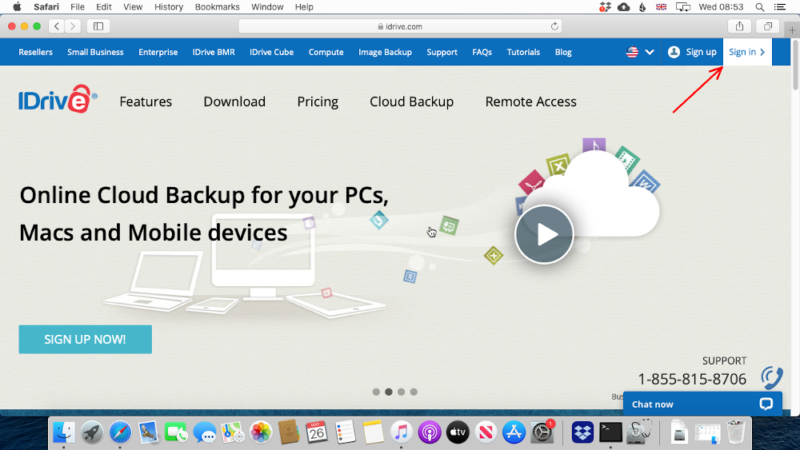
- Sign in to Your Account
Go to the online backup provider’s website and either sign in or create a free account.
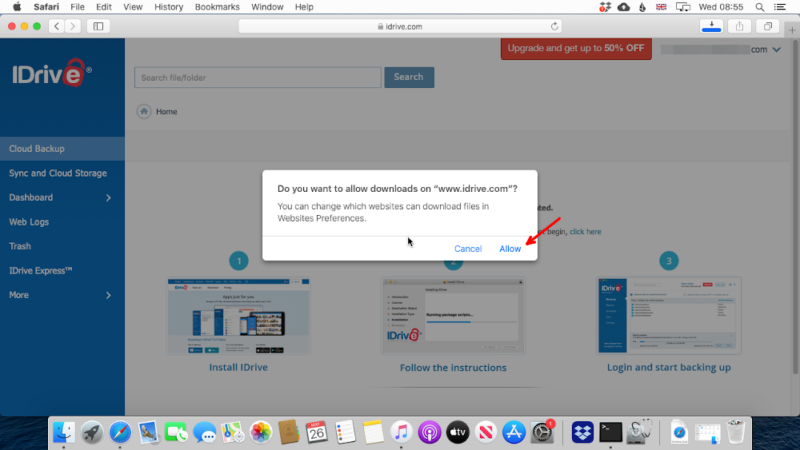
- Download the Backup Software
There will be a button to start the download. Click on this and then follow the on-screen prompts to install it, giving the provider any necessary permissions.
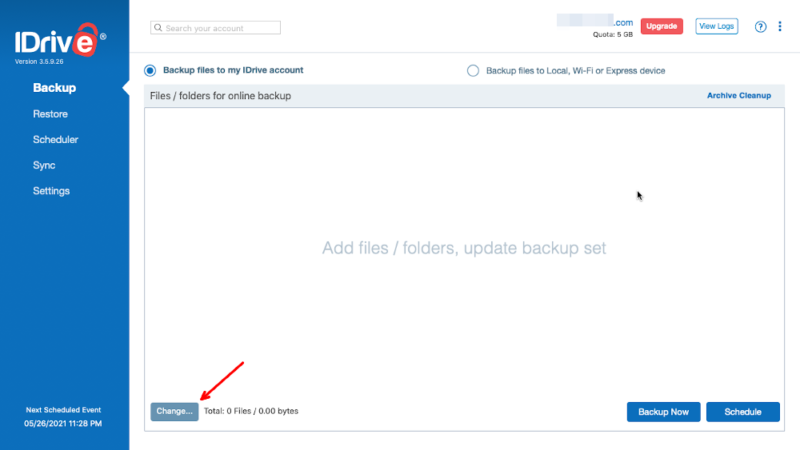
- Add a Folder to the Backup
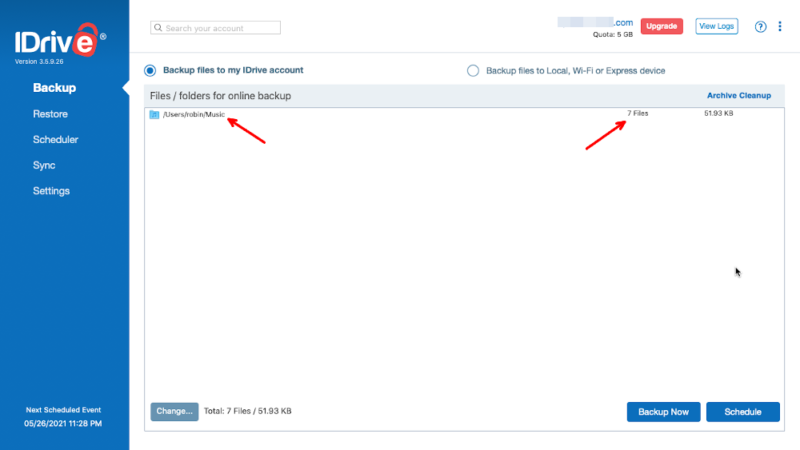
If it doesn’t find your iTunes folder automatically, you can manually add it instead. First, click on “change.”
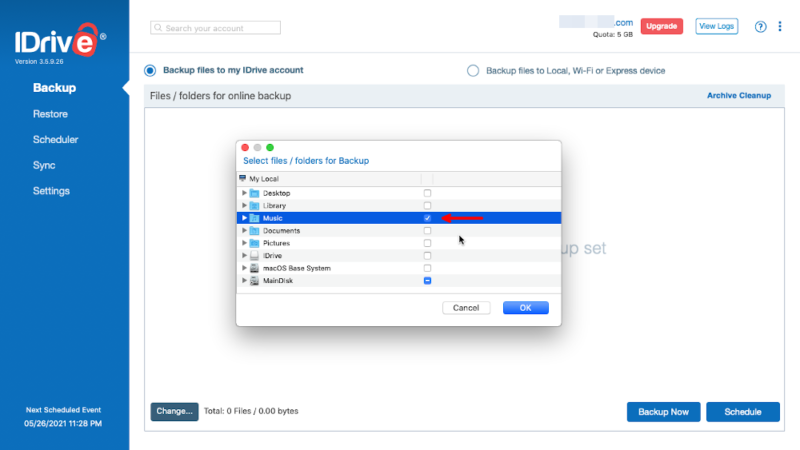
- Find Your Music Folder
In the window that opens, select the folder that contains your iTunes music library — by default, it’ll be in the “music” folder.
- Check That Everything Is in the Backup
The iTunes folder should now be on the list, and the file count should be close to the number of files in your library. If it isn’t, consolidate your files and try again.


Why Is My iTunes or Apple Music Library Missing Songs?
If your iTunes or Apple Music library is missing songs, the files may still exist but be stored somewhere the app can’t currently access. The fix depends on whether the files were stored elsewhere, kept on an external drive, never backed up or only synchronized with Sync Library.
The Files Were Never Consolidated
Problem: Some songs appear in your library but disappear after you move or restore it.
Likely cause: The files were stored elsewhere on your computer and were never copied into your main Music or iTunes media folder.
Fix: Search your Mac or PC for the missing files and add them back to your library. Once everything is present, consolidate the library before you back up your Apple Music library again.
The External Drive Is Disconnected
Problem: Songs or an entire library are missing when you open Music or iTunes.
Likely cause: Your library or some of its media files are stored on an external drive that isn’t currently connected.
Fix: Reconnect the drive and make sure it mounts correctly. If the app opens the wrong library, use the Option key when opening Music on Mac or the Shift key when opening iTunes on Windows to select the library stored on the drive.
Imported or CD Music Wasn’t Backed Up
Problem: You can restore some songs but not music you imported yourself or ripped from CDs.
Likely cause: Music purchased from the iTunes Store can generally be redownloaded from your purchase history, but locally imported files and CD rips aren’t iTunes Store purchases and need their own backup.
Fix: Restore those files from your external-drive or online backup. If no backup exists, you’ll need to recover them from their original source, such as the CD or the computer where the files are still stored.
Sync Library Was Your Only Copy
Problem: You expected Sync Library to restore every song after losing or replacing your computer.
Likely cause: Sync Library synchronizes your music across devices; it isn’t a backup service. Changes or problems with the synchronized library can therefore affect what appears on your other devices.
Fix: Check that Sync Library is enabled and that you’re signed in with the correct Apple Account, then check the cloud status of any missing songs. For long-term protection, keep a separate external-drive or online backup of your locally stored music and library files.
Final Thoughts
Whether you prefer your backups to be on an external hard drive or in the cloud, there’s no reason you can’t keep your music files safe. Just remember to check the location of your iTunes folder and consolidate everything before you begin.
If you want to protect more than just your music and movies, then you should check out our other guides on how to backup photos on your Mac, how to backup your Mac and how to backup a Mac to an external hard drive. These will help you keep your data safe from damage to your Mac computer or any digital accidents.
Do you store lots of music on your Mac? How have you backed up these songs? Did you use one of these three methods: external hard drive vs online backup? Let us know your thoughts in the comments section below. Thanks for reading.
FAQ
Your iTunes library is inside your music folder. Simply copy that folder to wherever you want to store the backup or include it when you create a backup with apps like IDrive.
In the “general” tab of your music preferences, there will be an option to sync your library to the iCloud music library. You’ll need iTunes match or Apple music to use this, and if you don’t have either, it won’t let you enable the option.
When you connect your external hard drive, it will show up in your Finder. Open that drive and your iTunes folder, then copy the music files to the hard drive.
No. Backing up an iTunes or Apple Music library protects the music and library data stored on your computer, while an iPhone backup protects data on the device itself. Current Macs use Finder for local iPhone backups, while Windows users can use the Apple Devices app or iTunes.