How to Use WeTransfer: Easy & Free File Sending in 2026
WeTransfer is a popular and completely free file transfer service that allows you to send large files for both personal and collaboration purposes. For all of you wondering how to use WeTransfer — we hear you, and that is why we have produced this step-by-step guide.


Written by Mauricio Preuss (CEO & Co-Founder)
Reviewed by Jackie Leavitt (Editor at Large)
Last Updated:
All our content is written fully by humans; we do not publish AI writing. Learn more here.
Key Takeaways: How to Use WeTransfer
- Upload Your Files: Open WeTransfer and add the files you want to send.
- Add the Recipient: Enter the recipient’s email address and your email address, then add an optional title or message.
- Send the Transfer: Click “Transfer” and complete email verification if prompted. WeTransfer will then send the recipient a link to download the files.
Facts & Expert Analysis:
- Free transfers have a rolling allowance: WeTransfer Free lets you make up to 10 transfers or send up to 3GB total within a rolling 30-day window. This means the allowance isn’t simply a per-transfer file size limit; your recent transfer activity determines how much of the free allowance remains.
- Starter substantially increases transfer capacity: The Starter plan retains the limit of up to 10 transfers but raises the total transfer allowance to 300GB, making it better suited to users who send larger files but don’t need unlimited transfers.
- Unlimited transfers start with Ultimate: WeTransfer Ultimate removes the transfer-count restriction and supports individual transfers of up to 1TB. Teams and Enterprise also provide unlimited transfers, making these tiers more appropriate for heavier or organizational use.
How to Use WeTransfer Video Guide:
WeTransfer is a popular file transfer service that makes it easy to send large files online without using traditional cloud storage. If you’re wondering what WeTransfer is and how it works, you upload your files, choose how you want to share them and WeTransfer hosts them temporarily so the recipient can download them.
A Free plan is available, alongside Starter, Ultimate, Teams and Enterprise options for users who need higher transfer allowances or additional features. In this guide, I’ll explain how to use WeTransfer, including how to send files for free and what to expect during the transfer process.
-
03/22/2024
Added video guide
-
09/04/2026 Facts checked
We updated WeTransfer’s plans, transfer limits, expiry rules and file-sharing process to reflect the current service.
How Do I Use WeTransfer for Free? Step-by-Step Guide
You can begin sending files with WeTransfer without manually signing up for an account first. However, WeTransfer now verifies your email address during the transfer process and automatically creates a Free account if you don’t already have one. Below, I’ll show you how to use WeTransfer for free step by step.
How Do I Transfer Files Using WeTransfer?
You can transfer files using WeTransfer by simply uploading your files and entering a recipient. This four-step process shows how to do this in more detail.
10,000+ Trust Our Free Cloud Storage Tips. Join Today!

- Demystify cloud storage terminology and key concepts in plain language
- Discover easy-to-implement techniques to securely backup and sync your data across devices
- Learn money-saving strategies to optimize your cloud storage costs and usage
- Upload Your File
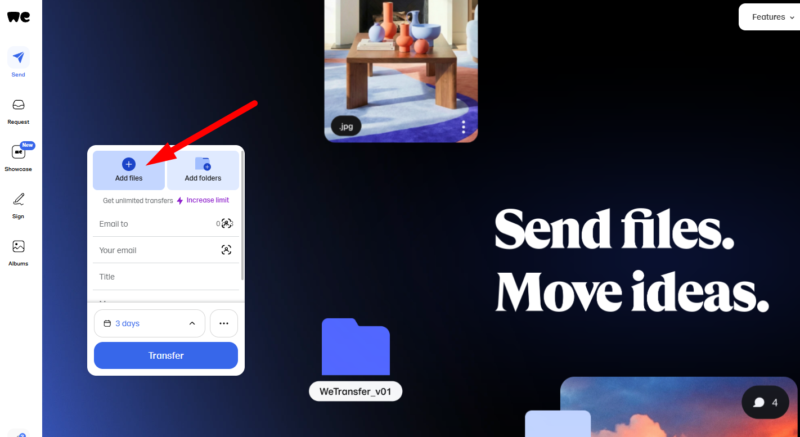
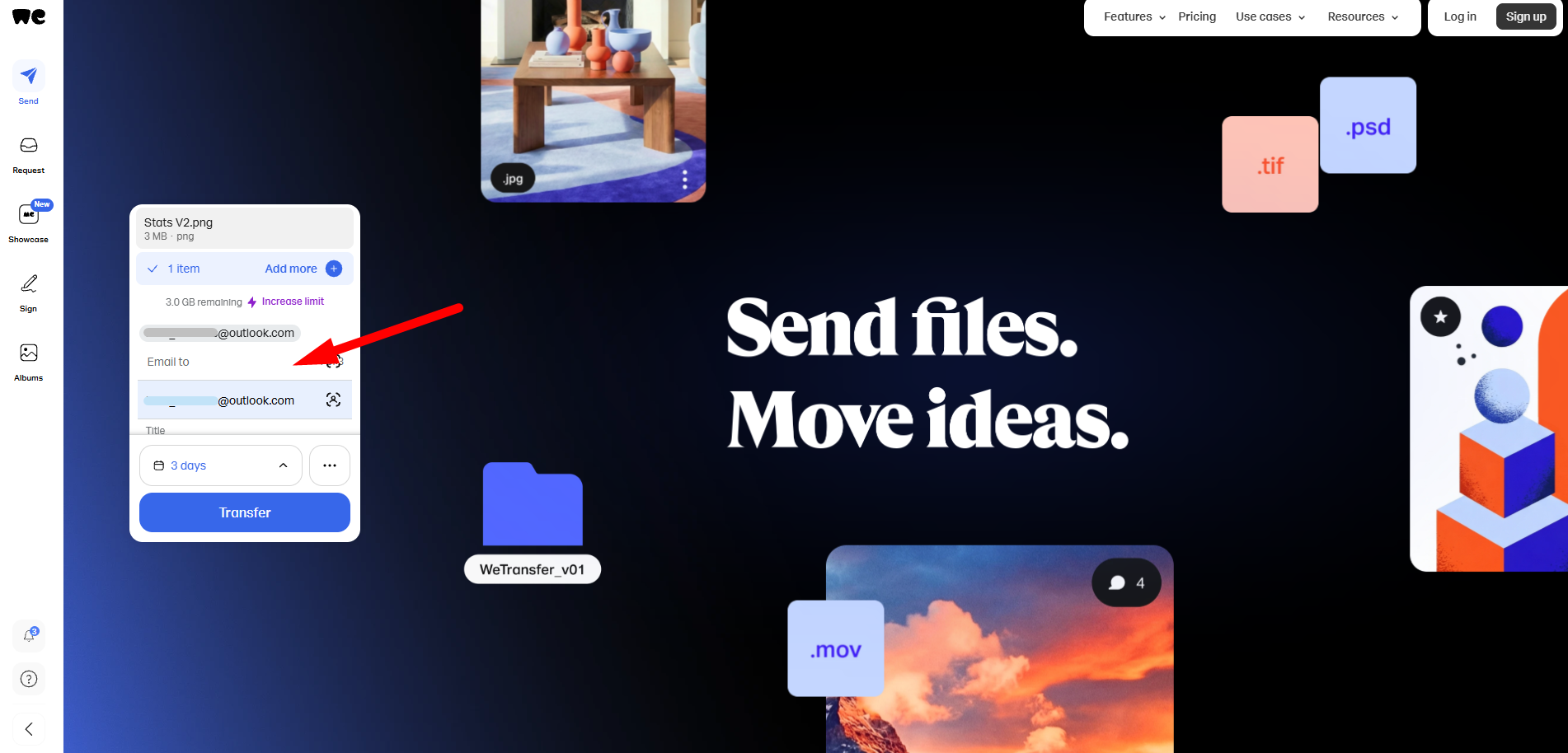
Since you don’t need to sign up, you can just go to the home page and start the transfer process. On the left-hand side of the home page, there is an option to add files. You can drag and drop your file right into the browser to upload.
- Enter the Recipient’s Address and Send Your File
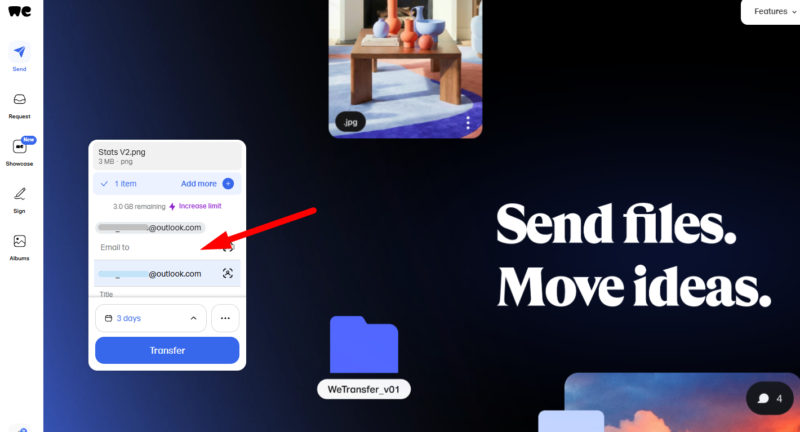
Next, enter the recipient’s email address, your email address and an optional message. As soon as the file gets uploaded, you can send it to the addressee.
- Send a Download Link
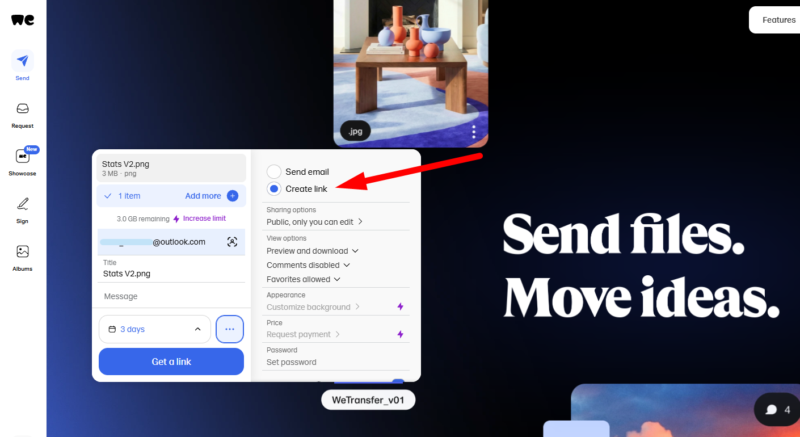
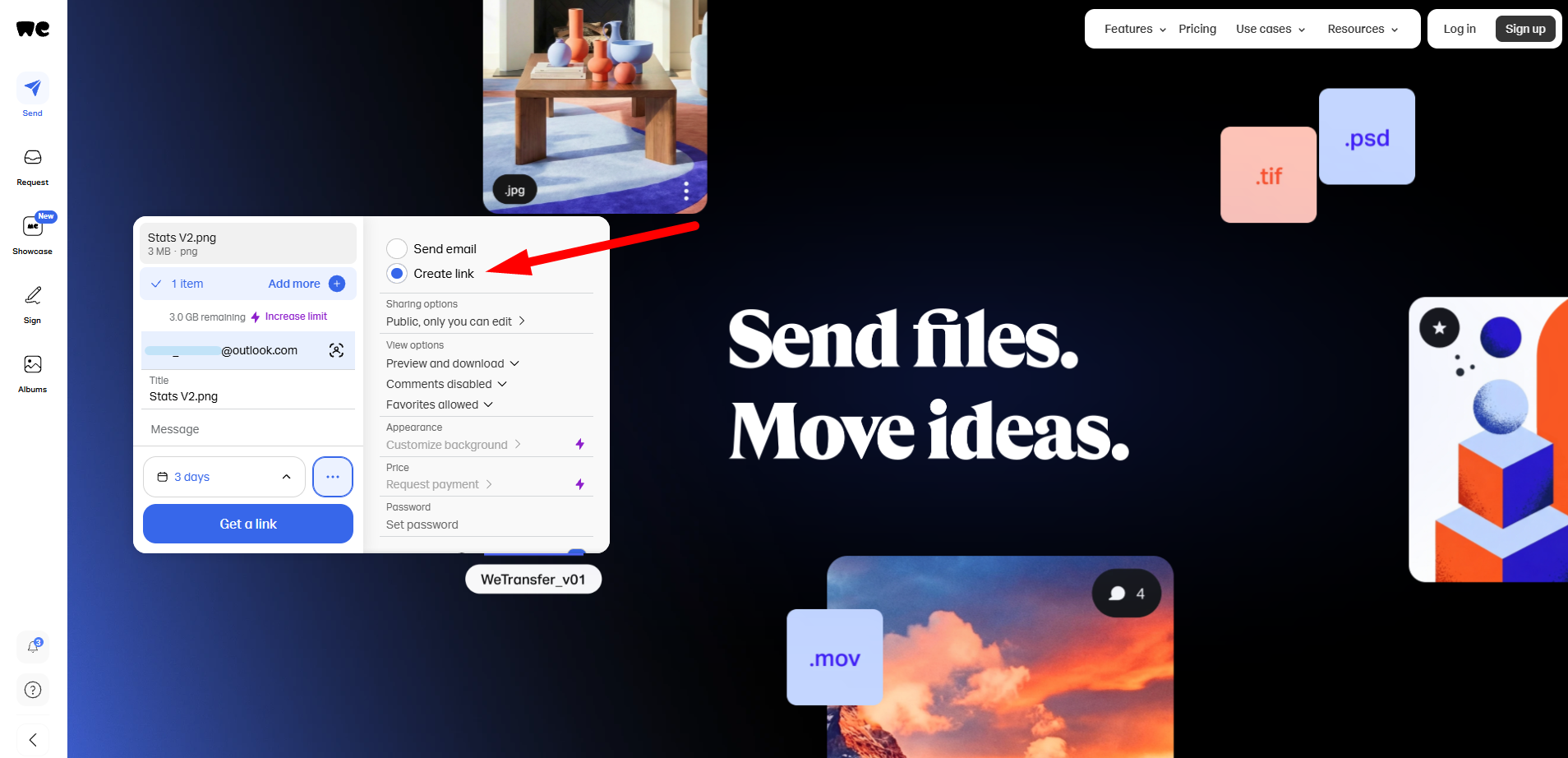
Alternatively, you can get a download link from WeTransfer. Simply click on the three dots icon, and you’ll see the option to get a transfer link.
- Enter Your WeTransfer Code
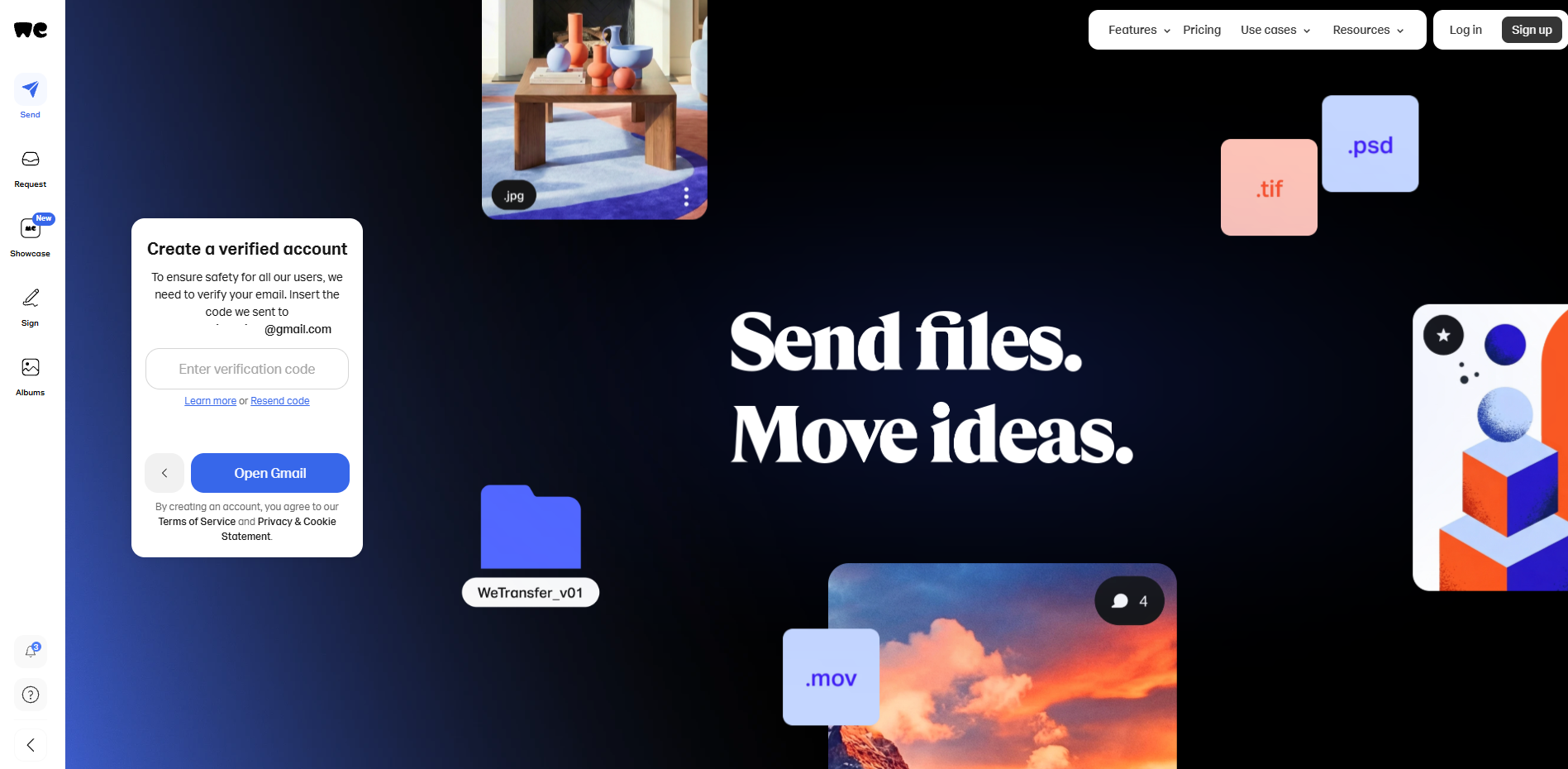
Before sending your files, WeTransfer first needs to verify your email address. You will receive a six-digit code via email that you need to enter. This code is active for 60 minutes. However, if you don’t manage to input it in time, you can always request a new code. Of course, if you create a WeTransfer account, you will be able to skip this step.


You’ll receive two emails after sending data through WeTransfer via the email option. The first email message includes a confirmation that your file transfer has been sent, and the second one comes when the recipient downloads the submitted file. The file(s) are available for download for seven days before being permanently deleted.
With the file link option, there are no visibility features available. However, if someone has the link, they can download and access your file — and you’ll be none the wiser. The only way out is to password-protect the file (which you can only do with WeTransfer Pro).
How Do I Download Files From WeTransfer?
To download files from WeTransfer, open the link you received by email or the shareable link the sender gave you. This takes you to the transfer page, where you can preview supported files or download them, depending on the permissions the sender selected.
WeTransfer’s Previews feature supports previews of compatible images, videos, audio files and documents, so you can check shared content without downloading it first. Where enabled, you can also leave comments, which can be useful when a transfer is being shared for review or feedback.
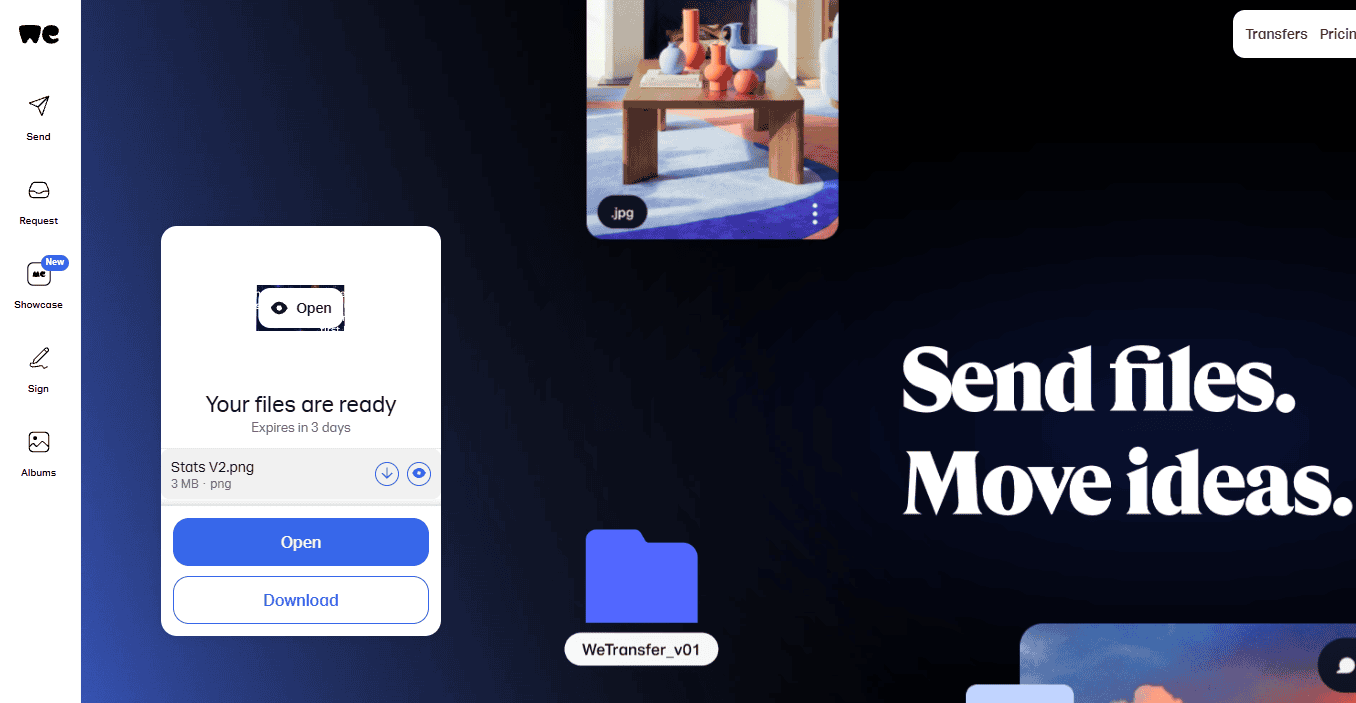
Not every WeTransfer link includes a download option. Senders can choose preview and download, download only, preview only or watermarked preview, meaning a preview-only transfer is intentionally designed to prevent you from downloading the original file.
Transfers don’t remain available indefinitely. Free and Starter transfers can remain available for up to three days, while some higher-tier transfers can stay available for longer. Depending on the plan and transfer, senders may also have options to recover an expired transfer.
If downloading is permitted, select the download option on the transfer page and save the files to your device. That’s all you need to do when figuring out how to use a WeTransfer download link.
Why Is WeTransfer Not Working?
If WeTransfer is not working, the most common causes are an unstable internet connection, browser problems, extensions or security software interfering with the transfer. VPNs, firewalls and antivirus software can also prevent uploads or downloads from completing.
- Stalled uploads or downloads: If a transfer stops progressing or fails, first check that your internet connection is stable and restart your browser, device and router. You can also try an up-to-date alternative browser or use private/incognito mode.
- Browser or extension interference: Ad blockers, script blockers and other browser extensions can interfere with WeTransfer or make parts of the site unresponsive. Disable extensions one at a time to identify the culprit, or try private/incognito mode, which generally runs without most extensions.
- Safari upload problems: WeTransfer currently documents a known issue on Safari for Mac that can cause uploads to hang or fail anywhere between 0% and 99%. If this happens, WeTransfer recommends switching to an up-to-date version of Chrome or Firefox.
- VPN, firewall or antivirus interference: Security software can block the connections WeTransfer needs to upload or download files. Temporarily turn off your VPN or test your firewall, antivirus and security extensions one at a time; on a work device or corporate network, ask your IT administrator whether WeTransfer is being restricted.
- Unstable internet connections: A brief connection interruption can cause a large upload or download to fail. Restart your router or try another reliable network; using a phone hotspot can also help determine whether your usual network is causing the problem.
- Device sleep during an upload: Keep your computer awake and your browser open until the upload finishes. WeTransfer warns that putting your device into sleep mode can interrupt the upload and cause the transfer to fail.
Final Thoughts: Using WeTransfer
WeTransfer’s simplicity is undoubtedly its biggest strength. In just a few easy steps, even people who don’t have much tech experience can quickly figure out how to use it to share PDF files and other types of media. We hope that this step-by-step guide has demonstrated just how uncomplicated it is to use WeTransfer.
Are you a WeTransfer user? How long have you been using WeTransfer? Are you happy with this file transfer service, or are you looking to switch to a WeTransfer alternative? Tell us in the comments below. As always, thank you for reading.
FAQ
WeTransfer is a file-transfer service that lets you send large files directly to a recipient’s email address or through a shareable download link. To use WeTransfer, upload your files, choose how you want to share them and complete the transfer; the recipient can then open the link to preview or download the files, depending on the permissions you set.
WeTransfer Free lets you make up to 10 transfers or send 3GB total within a rolling 30-day period. You can start sending without manually signing up, but WeTransfer verifies your email address and automatically creates a Free account if you don’t already have one. Free transfers can remain available for up to three days.
You send a video on WeTransfer the same way you send any other supported file: upload the video, choose to send it by email or create a shareable link, and complete the transfer. If your video exceeds the Free plan’s allowance of 3GB total within a rolling 30-day period, you’ll need to reduce its size or use a plan with a higher transfer allowance.
No. WeTransfer faced criticism in July 2025 after proposed terms appeared to allow customer content to be used to improve machine-learning models. The company subsequently revised the language and now states that it does not use customer content to train AI models.