You Can Use Google’s Results About You to Request Removal of Personal Information Online
Google recently upgraded its “Results About You” tool, so people can use it to detect and remove personal information online.


Written by Jackie Leavitt (Editor at Large)
Reviewed by Aleksander Hougen (Chief Editor)
Last Updated:
The “Results About You” tool can now detect and remove more of your personal information.
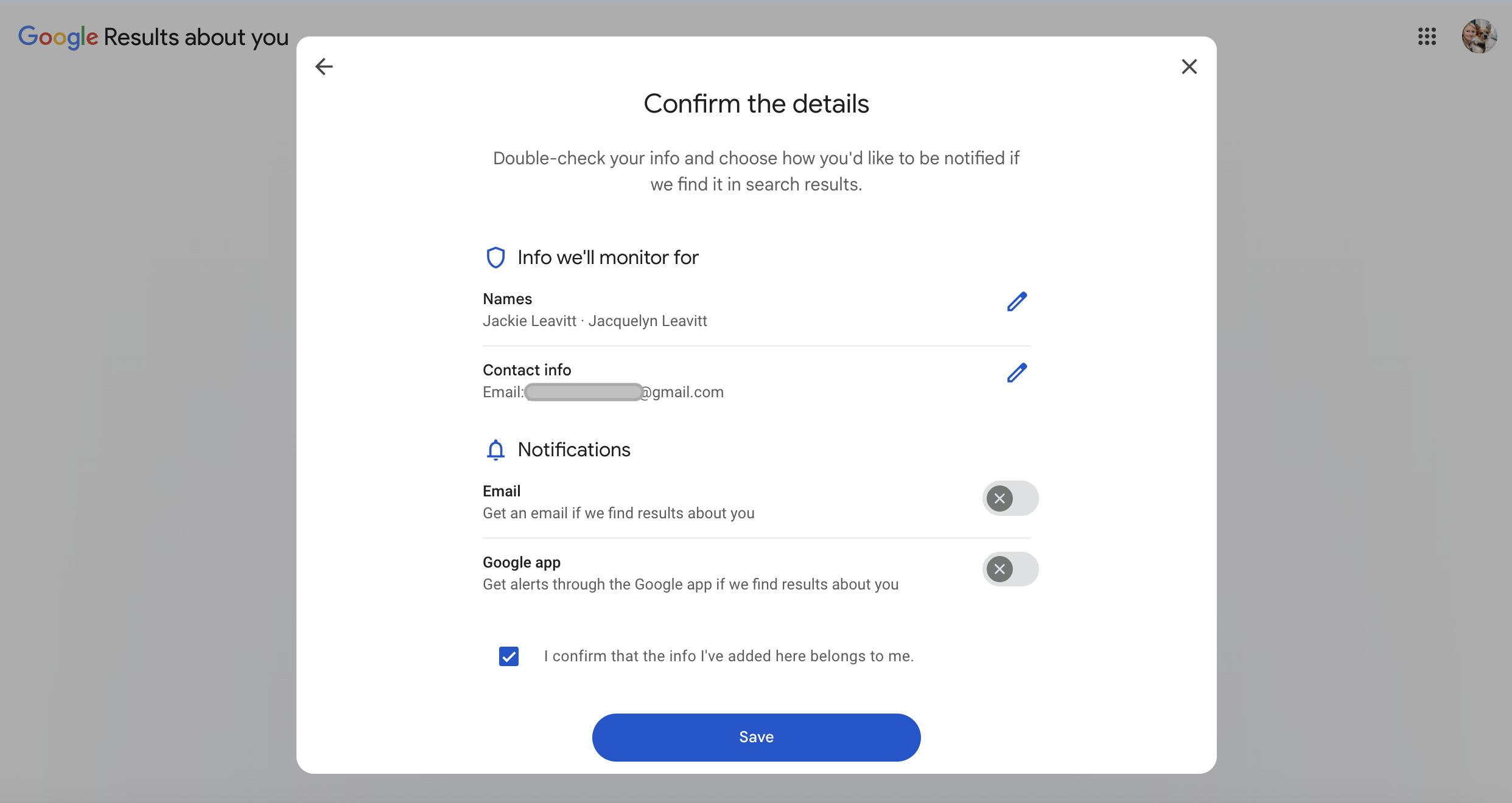
The process for monitoring is very simple; add any names you want monitored, then add any other personal information you want monitored, such as home address, phone number or email address.
When you confirm your details, you can also choose how Google alerts you when the tool finds your information online, either with an email or an alert — or neither and you will have to check the tool for any hits.
The first check takes about six hours. When “Results About You” finds information about you, it will alert you in the way you approved. You can then go to the “to review” tab to learn more about the results.
If you see results online that you’d like removed, you can select the result to expand the request to remove. You can also select “mark as reviewed” if you don’t want to start the removal process. Users will get an email to confirm the removal request.
Some results won’t be available for removal, for example if “Google considers some results valuable to the public,” such as online newspapers, business websites, or government or educational websites.
According to Google’s page about how to use “Results About You,” the tool is “currently rolling out for users who are over the age of 18 in certain markets.” For users under 18, they need to fill out a more detailed removal request form.
Note that this tool is not a full-fledged data removal service, but focused specifically on Google’s online results with your personal information. This means that it is not reaching out to data brokers to request your data’s removal, like California’s new, free DROP data removal service for residents.
If you’re looking to remove your data from brokers’ sites, you can read our guide on how to use a data removal service for more information. You can also sign up for our newsletter to receive the most recent news on online privacy and security.