California Launches DROP, a Free Data Broker Information Deletion Platform for Residents
Californian residents can now access the DROP platform and request data removal with state-logged data brokers, who will start processing requests in August 2026.


Written by Jackie Leavitt (Editor at Large)
Reviewed by Aleksander Hougen (Chief Editor)
Last Updated:
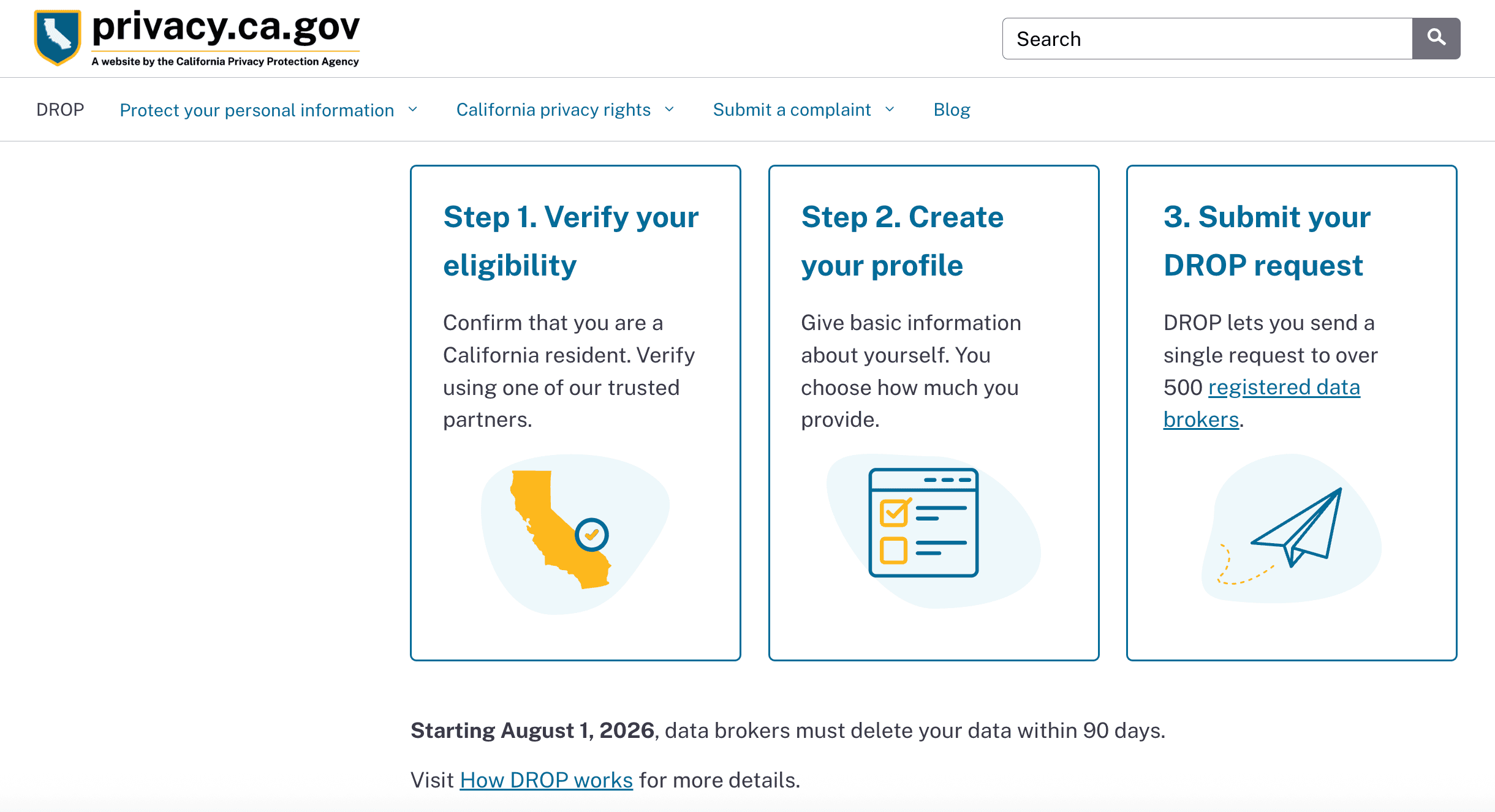
DROP — or the Delete Request and Opt-out Platform — allows Californian residents to submit a request with hundreds of data brokers to delete their data. According to the DROP website, the tool is the “first of its kind” in the world to provide this type of platform, and California is one of only four U.S. states (in addition to Oregon, Texas and Vermont) to require data broker registration.
Although DROP became available to residents in January 2026, data brokers won’t be required to start processing deletion requests until Aug. 1, 2026. Data brokers will then have 45 days to process the deletion request, with data deletion required within 90 days.
The Delete Act
The DROP service is part of The Delete Act (SB 362), signed into California law in 2023, which expanded a 2019 law that required data broker registration and a public registry administered by the Attorney General.
Under the Delete Act, CalPrivacy was required to: create a platform that allows Californians to submit a personal information deletion request; provide the requests to all registered data brokers; and be free and easy to access.
Additionally, data brokers are now required to: register with CalPrivacy annually; process the platform’s deletion requests; report the types of information collected and shared; and undergo audits to ensure they’re following the Delete Act.
The DROP site says the request will go to over 500 data brokers; in my January 2026 testing for this article, there are currently 143 total data brokers listed.
If data brokers don’t follow the law in either registering or deleting information, they can face steep daily fines:
- Failure to register: $200 per day plus unpaid fees and enforcement costs
- Failure to delete consumer personal information: $200 per day per consumer request, plus enforcement costs
How Data Brokers Work
Data brokers are businesses that gather and sell consumers’ personal information, including: social security number, geolocation data, browsing history, email addresses, phone numbers, hobbies and interests, health-related information, shopping habits and more.
When all this separate data is processed together, data brokers can infer more information about consumers, including political views, family details, health information, financial status and more.
Data brokers can package and sell or trade this information to organizations including advertisers, marketers, employers, recruiters, landlords, debt collectors, retail companies, political campaigns, employers, recruiters — and even hate groups, foreign governments and scammers.
All of this personal information can be deleted with a DROP request.
Testing DROP
DROP is incredibly easy to use, requiring only a few minutes to set up and submit my deletion request.
First, you need to verify you’re a California resident, either by entering personal information or by linking your Login.gov account.
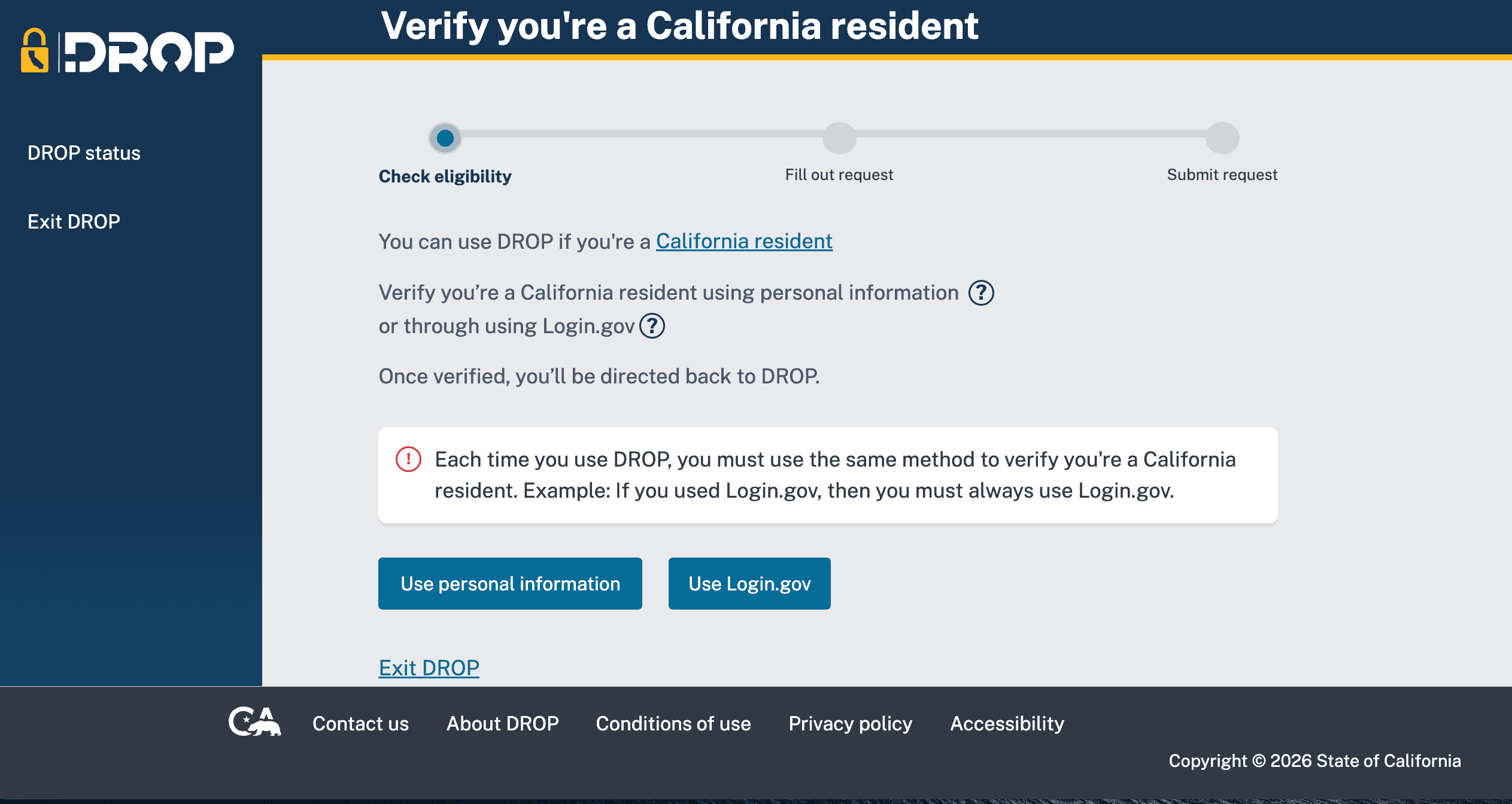
I opted to use my personal information: name, date of birth, address, as well as phone number and email, both of which you need to verify. Once you are verified, you’ll be able to enter your information as part of your data removal request.
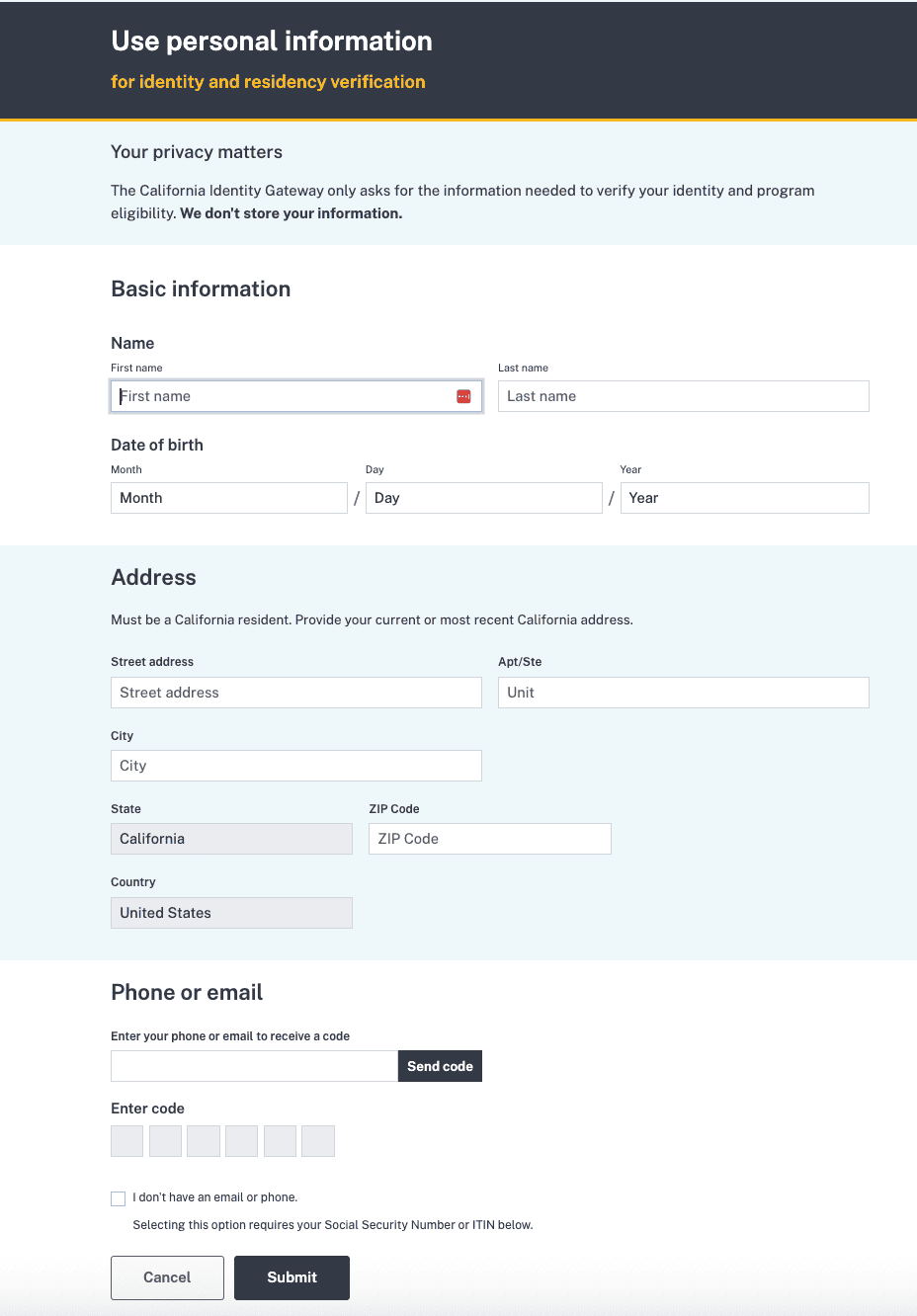
All information entered into DROP — name, date of birth, email address, phone number and other unique identifiers — is protected by encrypting and hashing (learn more about that here).
After you confirm your request, DROP will review the information before you can submit.
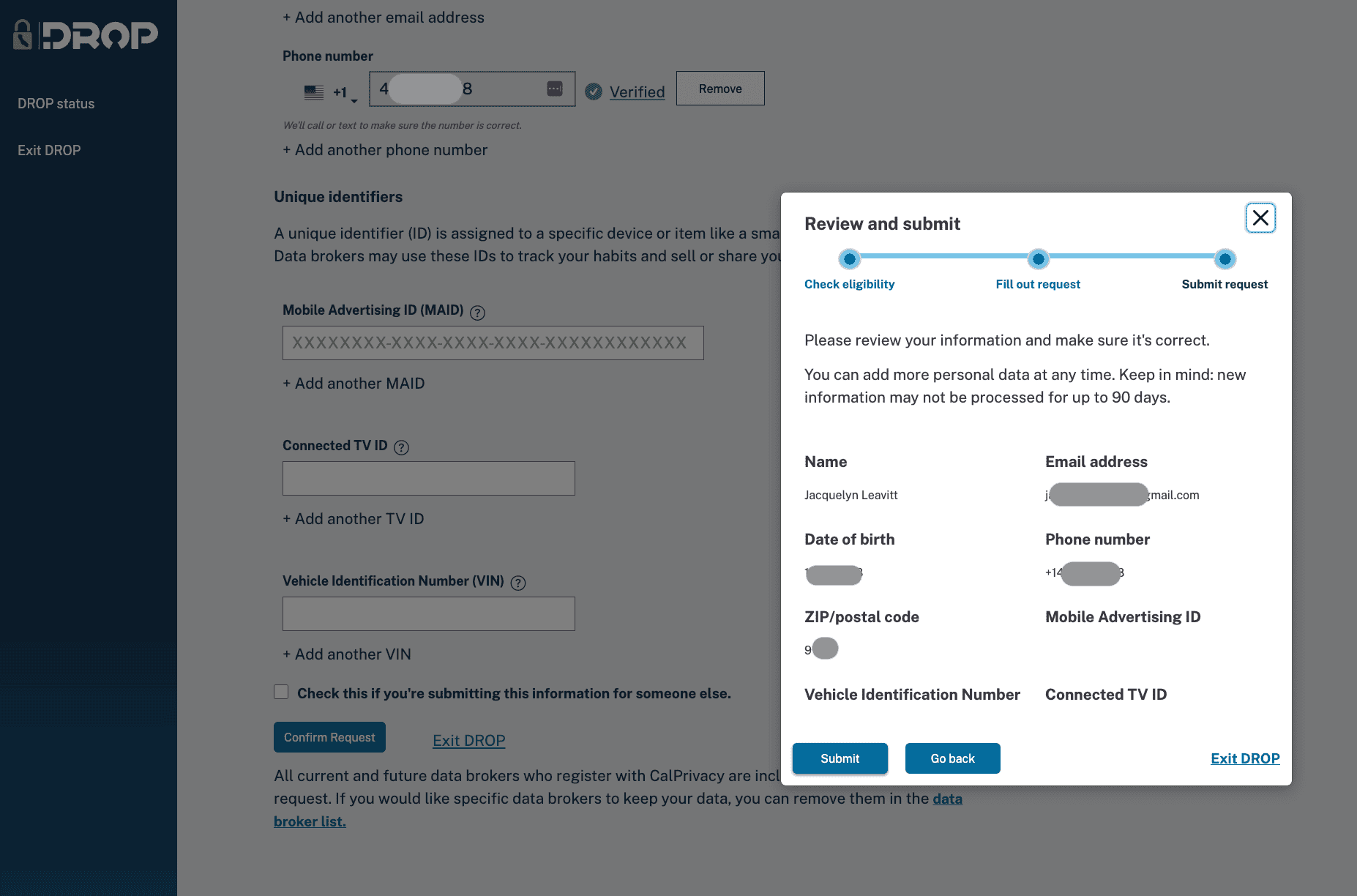
Next, DROP will provide your DROP ID, which you can print or email to yourself. The site will also explain what comes next.
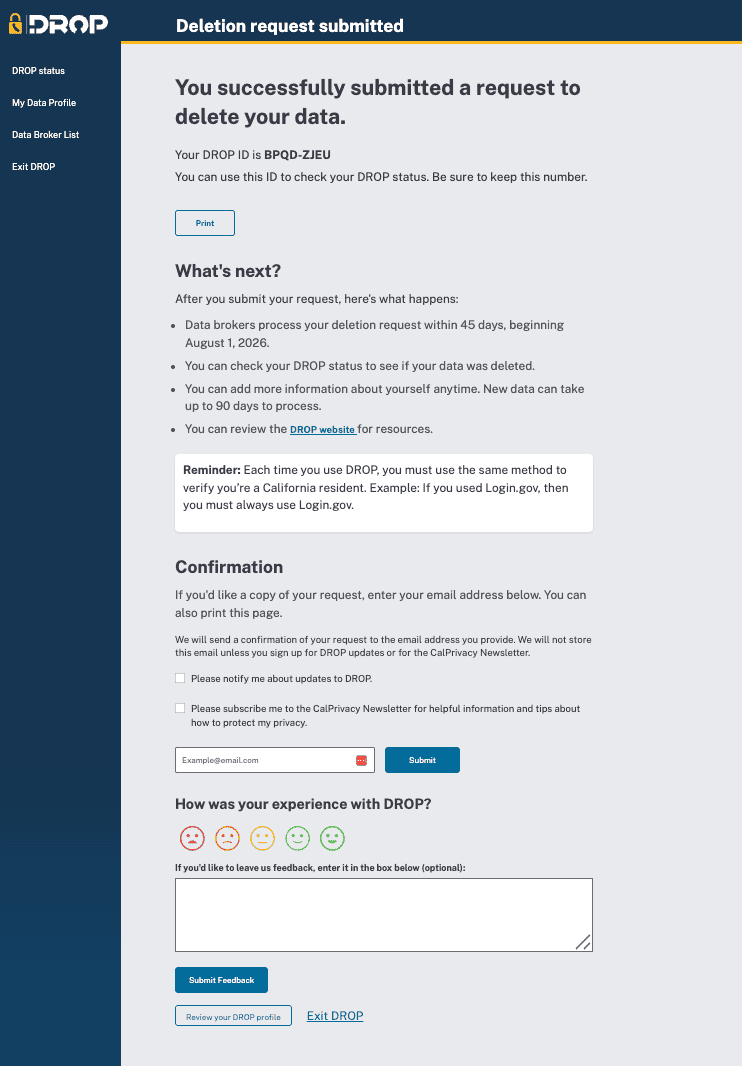
From here, you can explore the tabs on the left side. The platform’s “Data Broker List” tab shows all the registered data brokers.
The “My Data Profile” tab shows the data users have provided and the deletion status, including: Deleted, Opted Out, Exempted, Record Not Found and Pending. Note that some data might be exempt from deletion, for example, if it’s public record (like real estate or vehicle ownership, or voting records) or responding to a criminal or civil investigation.
Now, all I need to do is wait for August before my request starts processing with the registered data brokers.
If you’re interested in learning more about data removal, consider reading our guide on the best data removal services and how to protect your privacy online. If you’ve found this article helpful, you can also consider signing up below for our newsletter, which provides more information like this directly into your inbox.