Australia’s Underage Social Media Ban Goes Into Effect
Australia was the first country to plan a social media ban for users under 16 years old. The law went into effect on Dec. 10 without any major issues, though there have been mixed results with age verification accuracy.


Written by Jackie Leavitt (Editor at Large)
Reviewed by Aleksander Hougen (Chief Editor)
Last Updated:
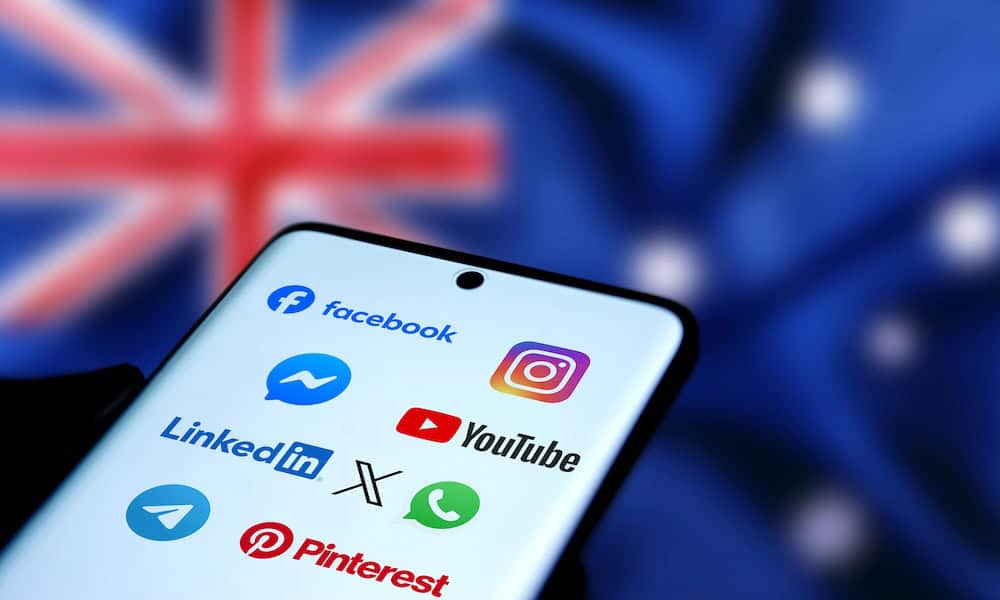
The change comes as an amendment to the Online Safety Act 2021, introducing a social media minimum age framework (SMMA) to the existing act aiming to protect Australians from severe online abuse.
Affected Social Media Platforms
The current list of social media sites affected by the ban include:
- Kick
- Snapchat
- Threads
- TikTok
- Twitch
- X (formerly Twitter)
- YouTube
The Australian government decided to ban platforms for underage users if their sole (or significant) purpose of the service is to enable online social interaction and if it allows users to post material on the service.
Services excluded from the rules are services focused on messaging, email, voice calling, video calling, online gaming, providing information about products or services, professional networking or development services, and education and health services. This means some services — including Discord, Messenger, Pinterest, Roblox, WhatsApp, YouTube kids and more — aren’t part of the restricted sites.
Also worth noting is that although underage Australians can’t have their own accounts, they can still access content on services in a logged-out state.
The government also made clear that they intend to review the list of affected social media services as users adjust to the new rules and potentially find alternatives.
“We watched what American kids did when TikTok went blank. They went to Rednote, they went to Lemonade, which is an Instagram clone,” said eSafety commissioner Julie Inman Grant.
Social Media Platforms Are Responsible for Implementation
The Australian government moved forward with the SMMA amendment after considering growing evidence of the harm social media can have on youths and teens.
The law stands out not only for being the first blanket age-based ban on social media in the world, but also for putting the responsibility of the ban on the social media giants, instead of the users.
According to the government’s SMMA factsheet, “The SMMA puts the onus on social media platforms, not parents or young people, to take steps to ensure fundamental protections are in place. This is about protecting young people – not punishing or isolating them – and supporting parents when it comes to overseeing their children’s health and wellbeing.”
Social media platforms are required to take “reasonable steps to prevent Australians under 16 years old from having accounts.” The law would also allow Australia to impose steep fines up to 9.9 million on social media providers for breaching the minimum age obligation, with the maximum fines increasing to $49.5 million for bodies corporate.
The Australian government also required that the social media companies protect online privacy by not requiring government identification to prove their age online; instead, apps must have a “reasonable alternative” for users.
Age-Verification & Location Signals
Most social media companies have opted for AI-evaluated age verification, when users upload a photo or video for an age estimation. Since the implementation days ago, there have been many reports of inaccurate age estimation, with some teens who are 12 or 13 years old being approved.
However, the social media platforms have other age-related data or signals they can use to evaluate a user’s age, such as:
- How long an account has been active
- Connections with other users who appear under 16
- Account holder interaction with content targeted at children under 16
- Language analysis of the user and the people they interact with
- Visual checks of user’s photos and videos for facial age analysis
- Audio analysis for age estimation
- Activity patterns around school schedules
- Membership in youth-focused communities, groups and forums
The social media platforms can also use location-based signals to see if a user lives in Australia and if they are using a VPN to pretend they don’t, such as:
- IP address locations
- GPS and other location services
- Device time settings and language
- Australian phone number
- Device identifier
- Data from app store, operating system or account settings
- Photos, tags, connections, activity and engagement
Collection of these signals could trigger a review process to check the user’s age and account.
Cracking Down on VPN Use
Although some users under 16 have access now — either by age verification errors, signing up for a new account with a different birthday, or any other means — they likely won’t in the future, said Communications Minister Anika Wells to ABC.
“Just because they might have avoided it today doesn’t mean that they will be able to avoid it in a week’s time or a month’s time,” Wells said. “Media platforms have to go back and routinely check under-16 accounts.”
If under-16-year-old users are contemplating using a VPN, Australia’s eSafety Commissioner Julie Inman Grant said that social media platforms are expected to “try to stop under-16s from using VPNs to pretend to be outside Australia.”
Many of the social media platforms have already confirmed their commitment to stopping VPN use to bypass the Australian law.
Snap confirmed with Information Age that using a VPN won’t help underage users access Snapchat. “Snapchat determines eligibility based on where your account has been active over the past month, not just your current network connection. If your account is locked because you’re under 16 in Australia, it will stay locked until you turn 16 and complete age verification.”
Also prepared to enforce the ban despite VPN usage is Meta. which owns Facebook, Instagram and Threads. “While VPNs allow users to change their IP address, we also consider signals beyond just IP when determining a user’s location,” a spokesperson said to Information Age.
Scam Warnings
As the new law goes into effect, many users and families might still be unclear about the details. Government officials are warning to be on alert for scams claiming users are breaking the law and require to pay a fine. As a reminder, underage users are not breaking the law and there are no criminal charges or fines — the only responsible party for adherence are the social media platforms.
Other Countries Considering Options
At this moment, the world’s governments are watching Australia, and some countries are considering their own laws, especially across Europe. We will continue to cover this topic as more information becomes available.